
To download this report you must be logged in or subscribe
Not a DVN member yet? Contact us now to join the DVN Community!
Following my four-day immersive visit to the 2026 Beijing International Automotive Exhibition, I have compiled this report to capture the pulse of an industry in the midst of a radical transformation. This analysis is structured to provide both a high-level strategic outlook and a deep dive into the specific hardware and software innovations that are redefining the “car” as we know it.
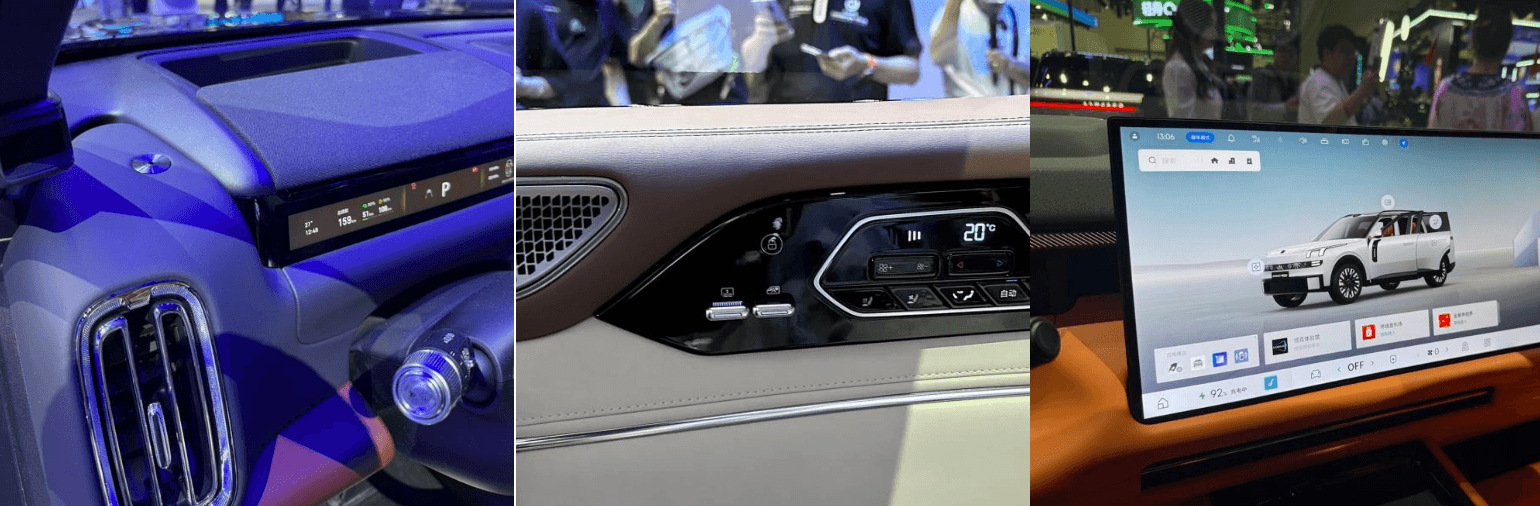
The report begins with a concise list of key takeaways and a future outlook, highlighting the rapid shift toward a “value-first” competition model. It then transitions into a macro analysis of the Chinese domestic market, examining the intensifying “war of attrition” and the critical role of tech-giant alliances. This is followed by a detailed technical review of the latest observations in interior hardware—focusing on displays, seating, CMF, and storage—as well as software designs centering on HMI and HUD evolution. To provide a tangible perspective, I have included a selected list of visited show cars from brands such as AVATR, BYD, Xiaomi, and Zeekr, which represent the current peak of the market.
Conclusion: The Convergence of Mobile Living
The 2026 Beijing Auto Show reveals an industry that has successfully inverted the traditional hierarchy: the car is no longer a standalone machine but a continuously evolving platform embedded in a vast technological ecosystem.
As the “war of attrition” intensifies, I estimate that design and innovation will become increasingly homogenized, as the car moves closer to the status of a standardized consumer product. The leverage of the digital ecosystem will become the most critical factor for brand survival. We will see a rapid trickle-down effect, where premium features (such as 0-G seating and AR-HUDs) become standard in entry-level segments. Finally, these rapid bursts of “small innovations” introduced in China will increasingly cross borders, fundamentally influencing and disrupting European design standards in the years to come.


