
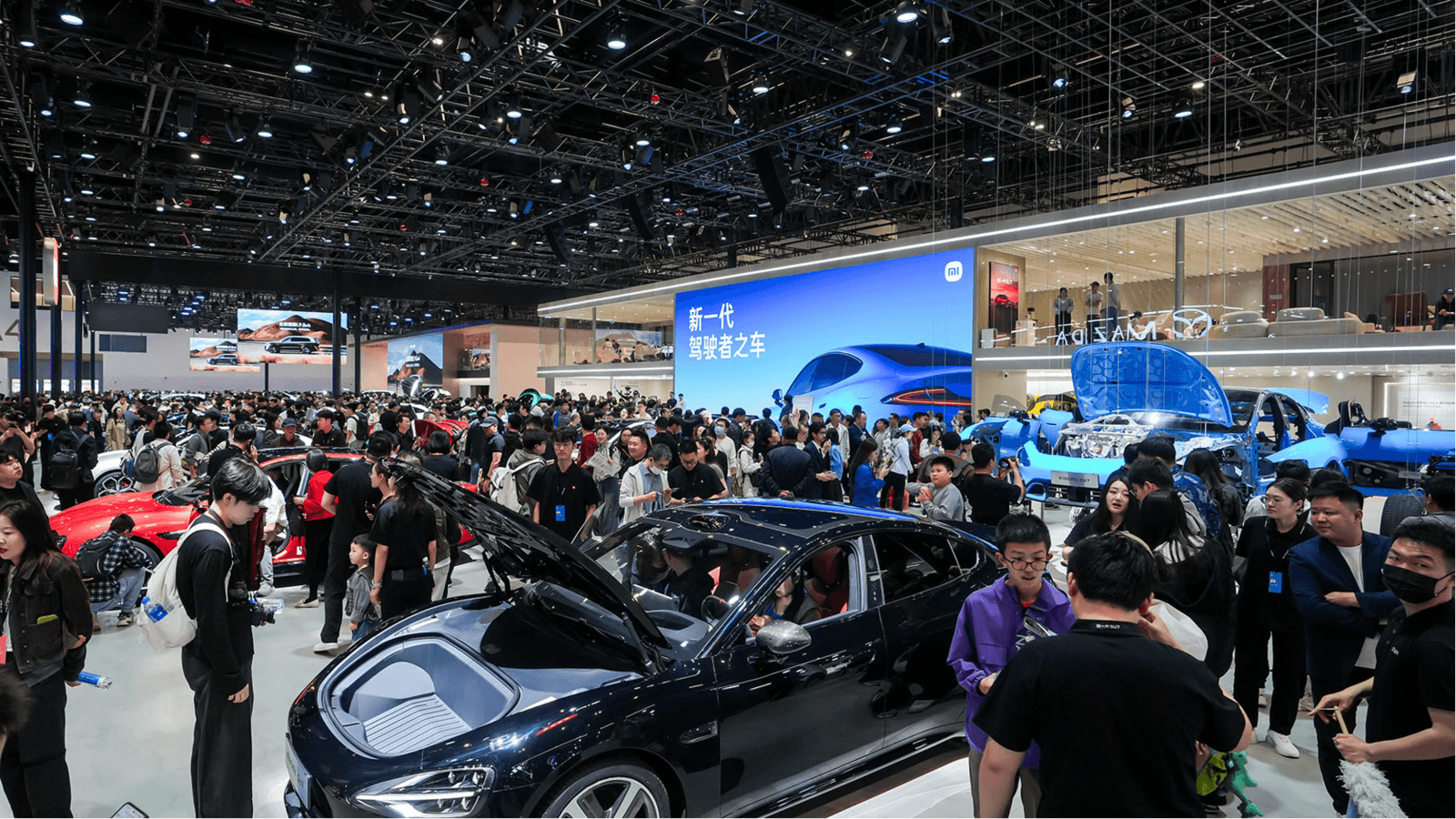
The DVN Auto China / Beijing 2026 report invites us to look at the vehicle interior from a slightly different angle. Beyond the visible novelties, it highlights a deeper evolution: the automotive cabin is no longer designed only around the driving position, but around multiple uses, multiple postures and multiple living zones.
For many years, the cockpit followed a clear logic: steering wheel, pedals, cluster and center console. The driver was naturally the main point of reference. This logic remains essential, but it is expanding. The front area continues to supervise driving, ADAS and critical information, while the rear area is increasingly becoming a space for comfort, relaxation, entertainment and conversation.
Two transformations stand out. The first concerns the seat. It is no longer only a comfort or styling component; it is becoming a true organizer of interior space. Rotation, relaxation, bed position, conversation mode or cinema mode: each function changes the way the cabin is designed, used and perceived.
The second concerns the HUD. The windshield is progressively becoming an interface surface, bringing information closer to the driver’s real field of vision. This evolution can improve the continuity between driving, perception and assistance, provided it remains carefully controlled.
This is where the real challenge begins. A relaxation seat must also meet requirements for restraint, airbags, posture detection and crash safety. A spectacular HUD must remain readable, reliable, durable, cost-acceptable and compatible with driver attention.
Beijing 2026 shows that the interior is entering a more systemic phase, where comfort, safety, ergonomics and interface must be considered together.
This is the perspective that the DVN report invites us to explore further.
Contact Emilie Bonnet or Laurent Sérézat.
Take care,



