
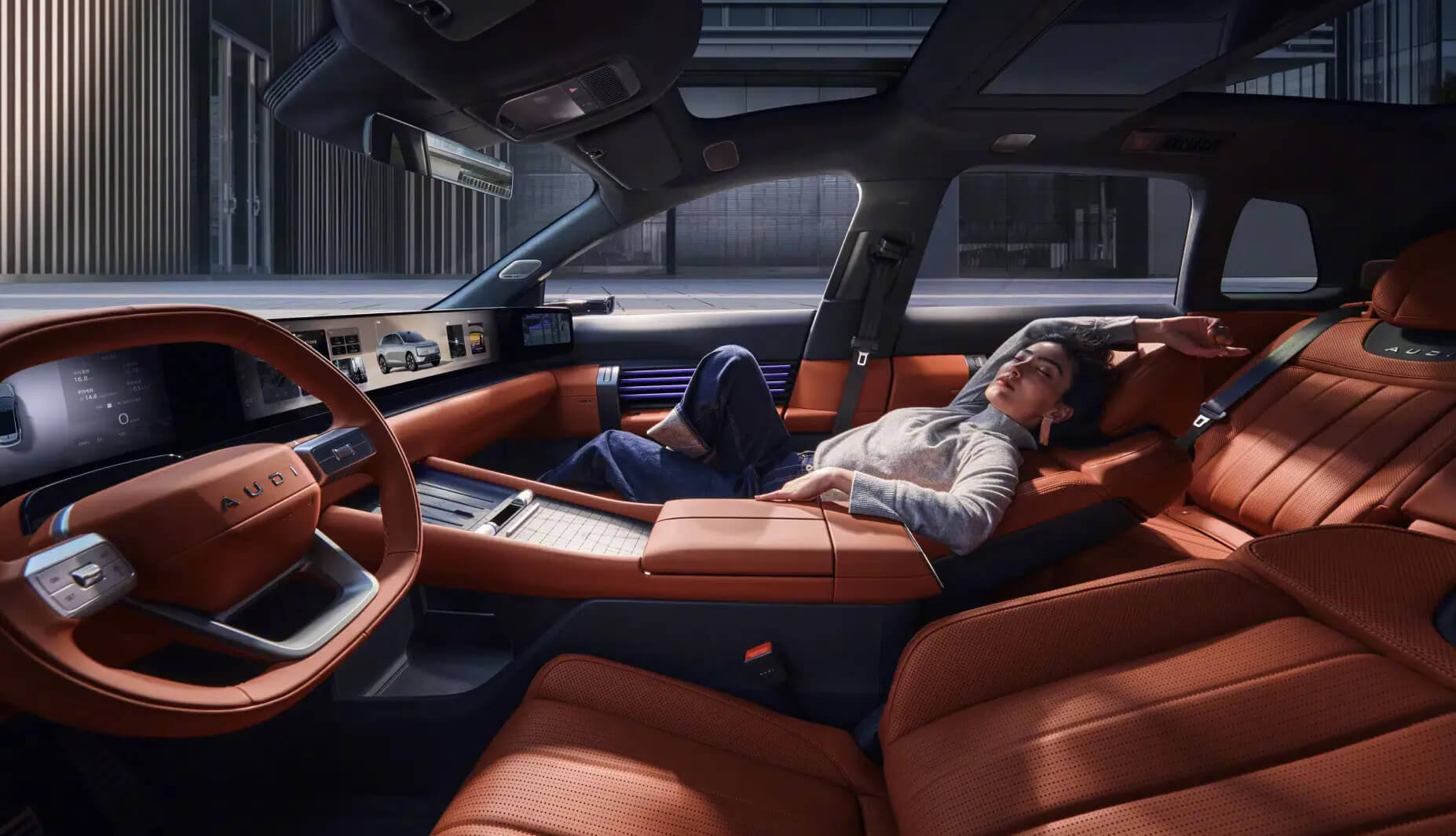
Interior lighting has become one of the most powerful tools available to automotive designers. The Antolin interview we bring you this week illustrates how lighting is moving beyond decorative strips and welcome animations. Hidden behind wood veneers, fabrics, translucent polymers or premium decorative surfaces, it structures the cabin and creates atmosphere.
Tomorrow’s premium cabins will be defined by the way they work as a coordinated, seamless system. Smart surfaces, CMF, electronics, interfaces, lighting, and materials are converging to deliver interiors that are more intuitive, natural, and emotionally engaging.
Seating is another example of this evolution. As highlighted in this issue by Andrew Leuchtmann, the seat is now more than a comfort and safety component. In China, it has become one of the strongest differentiators in premium vehicles. Zero-gravity seats, lounge-oriented rear cabins, multizone massage systems, intelligent climate functions, and integrated lighting, audio, and controls are elevating the role of seating within the cockpit.
These are the goings-on we’ll explore during the DVN Shanghai Workshop, on 8 – 9 September.We are pleased to introduce the preliminary docket (available within the next few hours), gathering OEMs and suppliers around the technologies currently shaping automotive interiors: smart surfaces, seating, ambient lighting, and CMF. The next generations of cockpit innovation will be built on the convergence of these disciplines.
Questions, comments, suggestions? Contact Emilie Bonnet or Laurent Sérézat.
Take care,



