
Seats cater to their users now in ways never before possible. In the Xiaomi Pengcheng, for example, there are seats that can rotate when the car is parked, longitudinal and lateral second-row seat mobility, and meeting, relaxation, and sleeping configurations.
This flexibility brings significant new engineering constraints. Rails and mechanisms must provide precision, rigidity, and crash-load resistance. Once a seat leaves its conventional position, belt geometry becomes critical. Integrating the belt into the seat provides greater freedom of movement, but also increases mass, cost, and the loads transmitted to the floor. This exercise can be (must be!) iterated for airbags, too.
This isn’t entirely new territory; consider sliding side doors. They improve access to the rear rows, but their large apertures complicate body structure, mechanism integration, and crashworthiness – notably side-impact protection. Door trim must remain thin while accommodating controls, storage, lighting, speakers, and decorative elements. Every millimeter gained for passenger access influences safety, acoustics, and perceived quality.
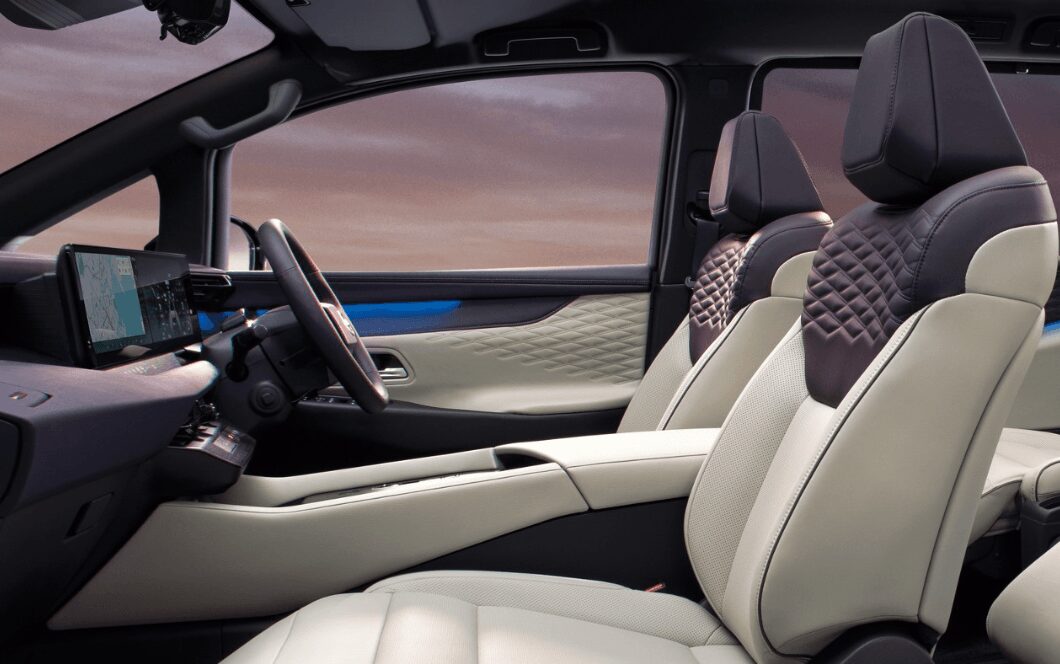
The new Nissan Elgrand, for one, effectively wrangles these constraints to provide a premium experience by combining posture, silence, zoned comfort, and genuine attention to the third row.
This issue of the DVN Interior newsletter is the last before our summer break. We’ll return after the holidays with new topics and fresh analyses. Until then, we wish you an excellent summer and many inspiring discoveries. And above all: stay cool!
Questions? Comments? Suggestions? Contact Emilie Bonnet or Laurent Sérézat.
Take care,



