
CUPRA’S RAVAL AND THE FUTURE OF CMF
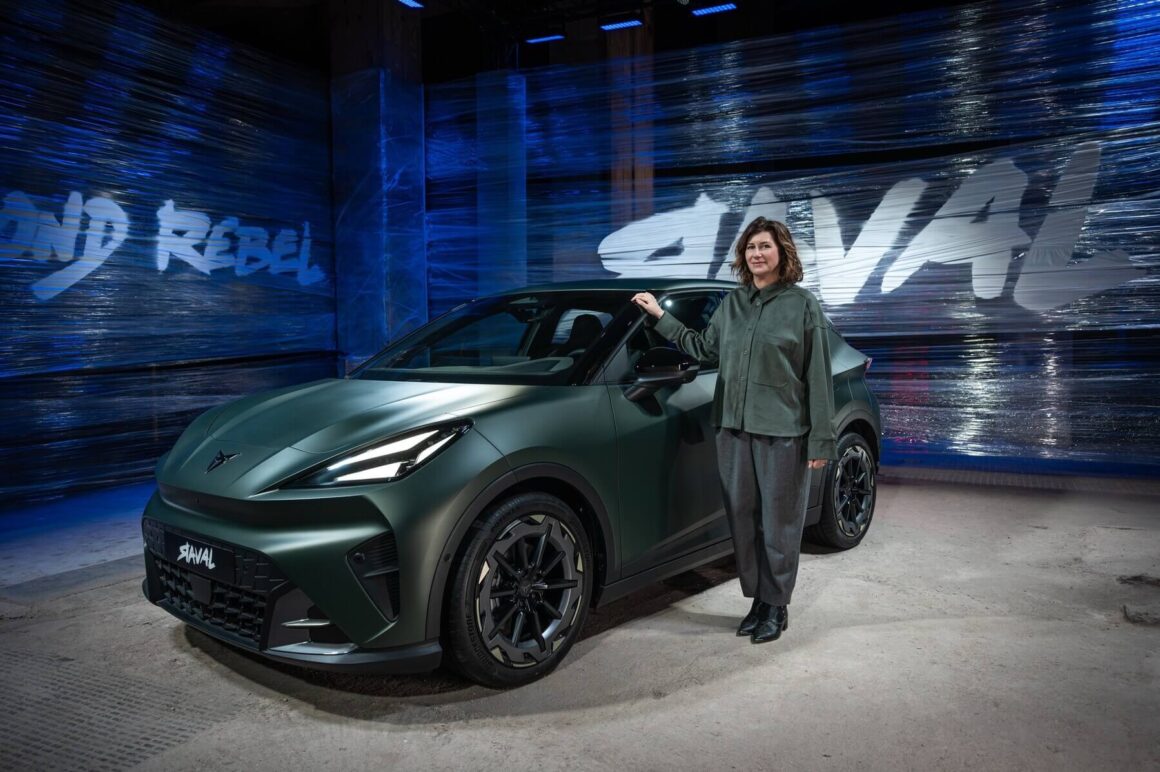
At the intersection of material innovation, brand storytelling and industrial transformation sits Francesca Sangalli, Head of Colour & Trim and Concept & Strategy at SEAT and CUPRA. With a career shaped by cross-disciplinary design thinking and a strong appetite for challenging convention, Sangalli has been instrumental in positioning CUPRA as one of the most progressive voices in automotive CMF today. Her work consistently bridges emotional design with advanced manufacturing, pushing beyond aesthetics into system-level innovation.
The recent reveal of the CUPRA Raval at Milan Design Week 2026 marked a pivotal moment for the brand. Positioned as an urban electric vehicle tailored to a new generation of drivers, the Raval is not just a product: it is a manifesto. It reflects CUPRA’s evolving CMF strategy, one rooted in bold material expression, parametric thinking and a holistic approach to sustainability.
What follows is a conversation with Sangalli on how the Raval redefines automotive CMF, from process to perception.
How does the Raval reinterpret CUPRA’s CMF identity for a younger, urban audience?
Francesca Sangalli: CUPRA’s CMF identity has always been built on strong, recognizable pillars, but evolution is essential. With the Raval, we started from a deep understanding of the customer, Gen Z, digital natives who are highly sensitive to sustainability and inclusivity.
We challenged the traditional definition of sportiness in automotive. Instead of performance being purely aggressive or masculine, we embraced gender neutrality and focused on shared values. The result is a more progressive expression of sportiness, one that feels relevant, conscious and emotionally engaging.
Which CMF elements in the Raval are designed to become long-term brand signatures?
Francesca Sangalli: We maintained core elements like our radical approach to color, CUPRA colors are never dictated by the market. They are intentional, distinctive, and rooted in materiality.
For the Raval, we introduced shades like a matte mineral-inspired Manganese Green and a Plasma finish, an iridescent color that subtly shifts from green to purple depending on light and movement. These tones feel natural yet sophisticated, reinforcing our palette.
Copper remains central. It’s not just a color, it’s a signature that enhances our parametric design language and anchors the brand visually.
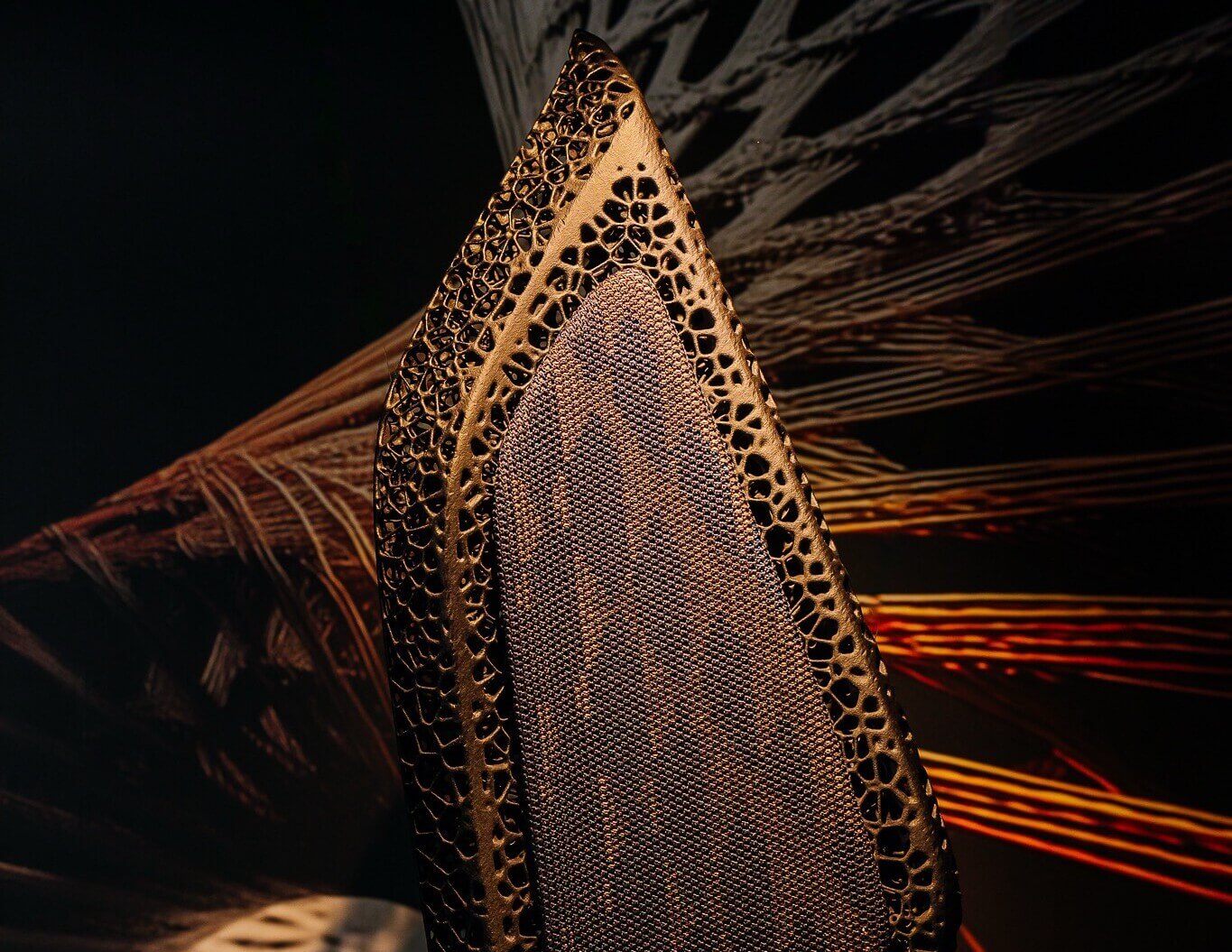
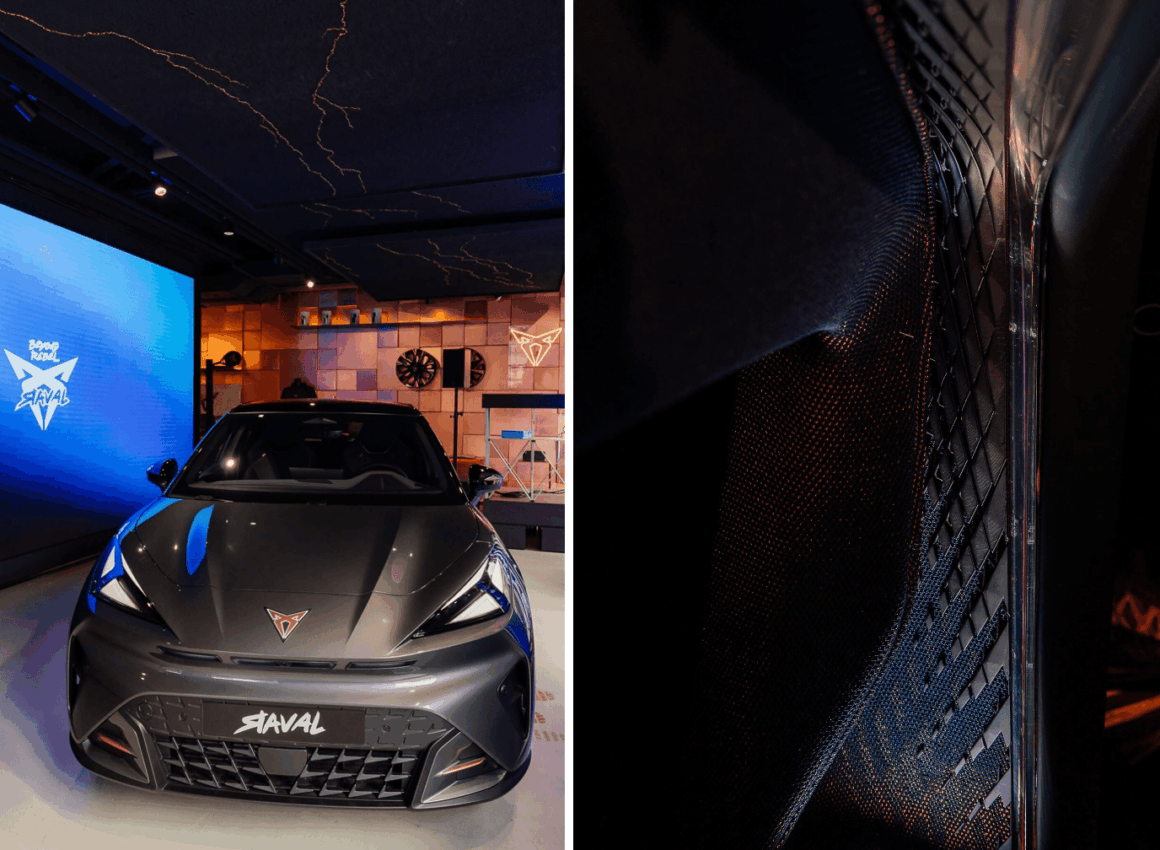
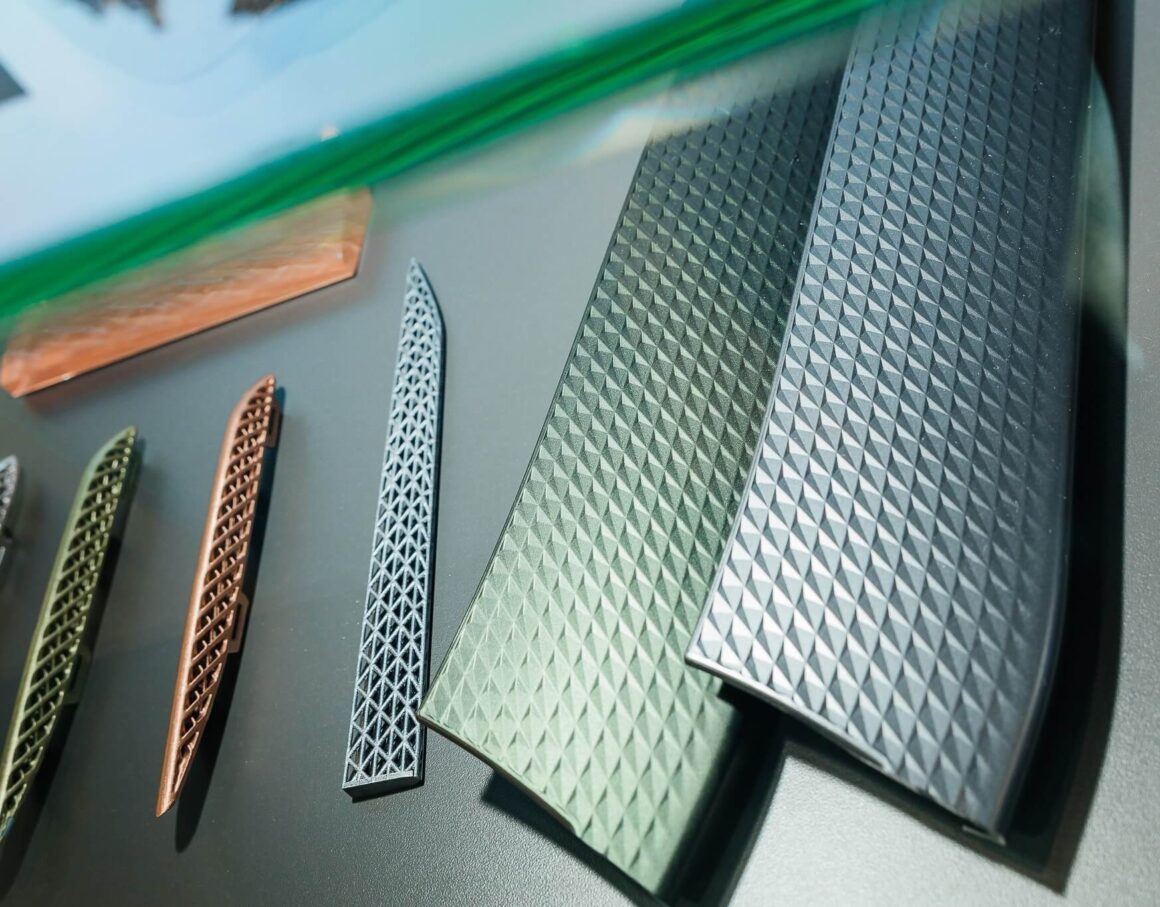
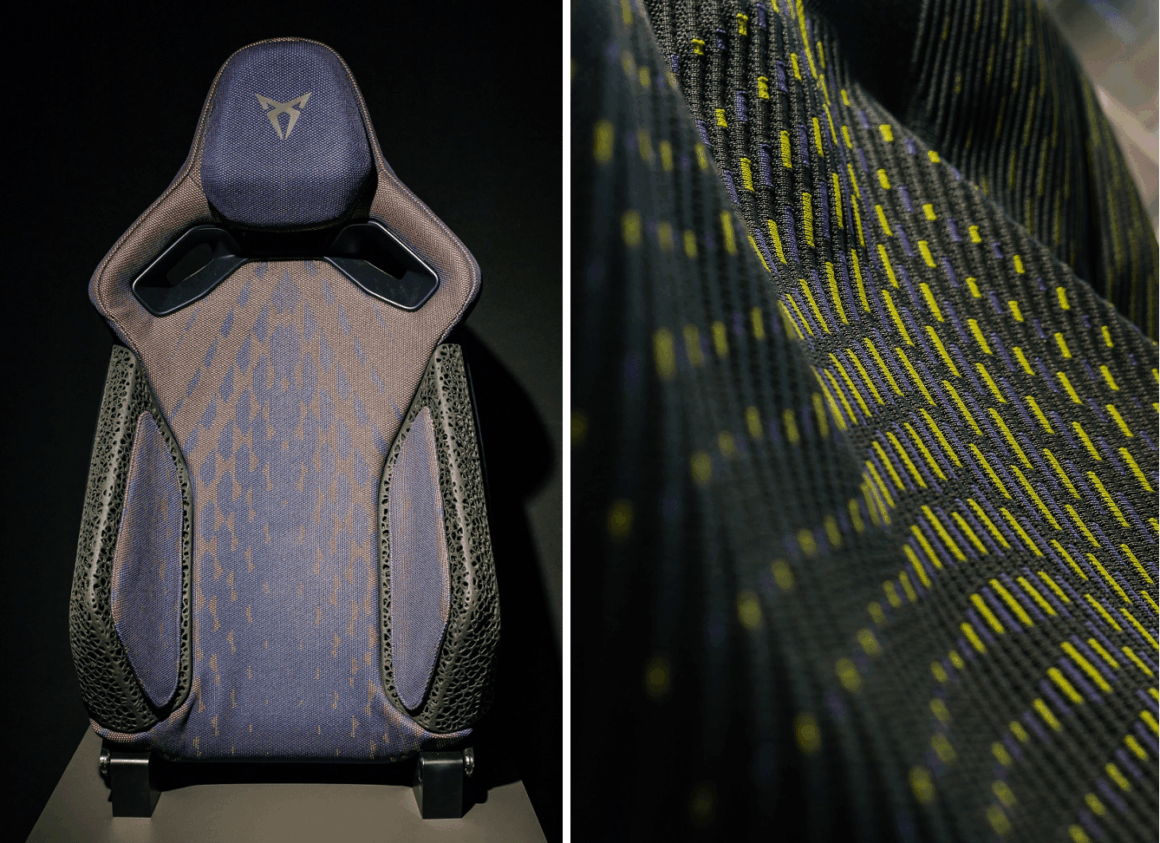
Materiality itself becomes a highlight. With additive manufacturing, we move beyond surface into the mass of the material. It’s a natural evolution of parametric design, creating graphical codes that are embedded within the structure. This approach is both expressive and sustainable, as it eliminates waste and allows infinite design possibilities.
The Raval introduces new manufacturing approaches. What drove this shift?
Francesca Sangalli: Disruption doesn’t come for free; it requires effort, alignment and belief. Automotive is a highly structured industry, and changing established processes is difficult.
But at CUPRA, we align strongly across departments. Design, brand and marketing all tell the same story. This shared vision allows us to push boundaries collectively and this is visible through the harmony across the City Garage, the various Events, and objects we developed beside the vehicles.
With the Raval, we didn’t just design a product, we rethought how we design. That meant integrating new tools, new collaborators, and new ways of working from the very beginning.
How did collaborations, particularly with Tesca, enable innovation in the Raval?
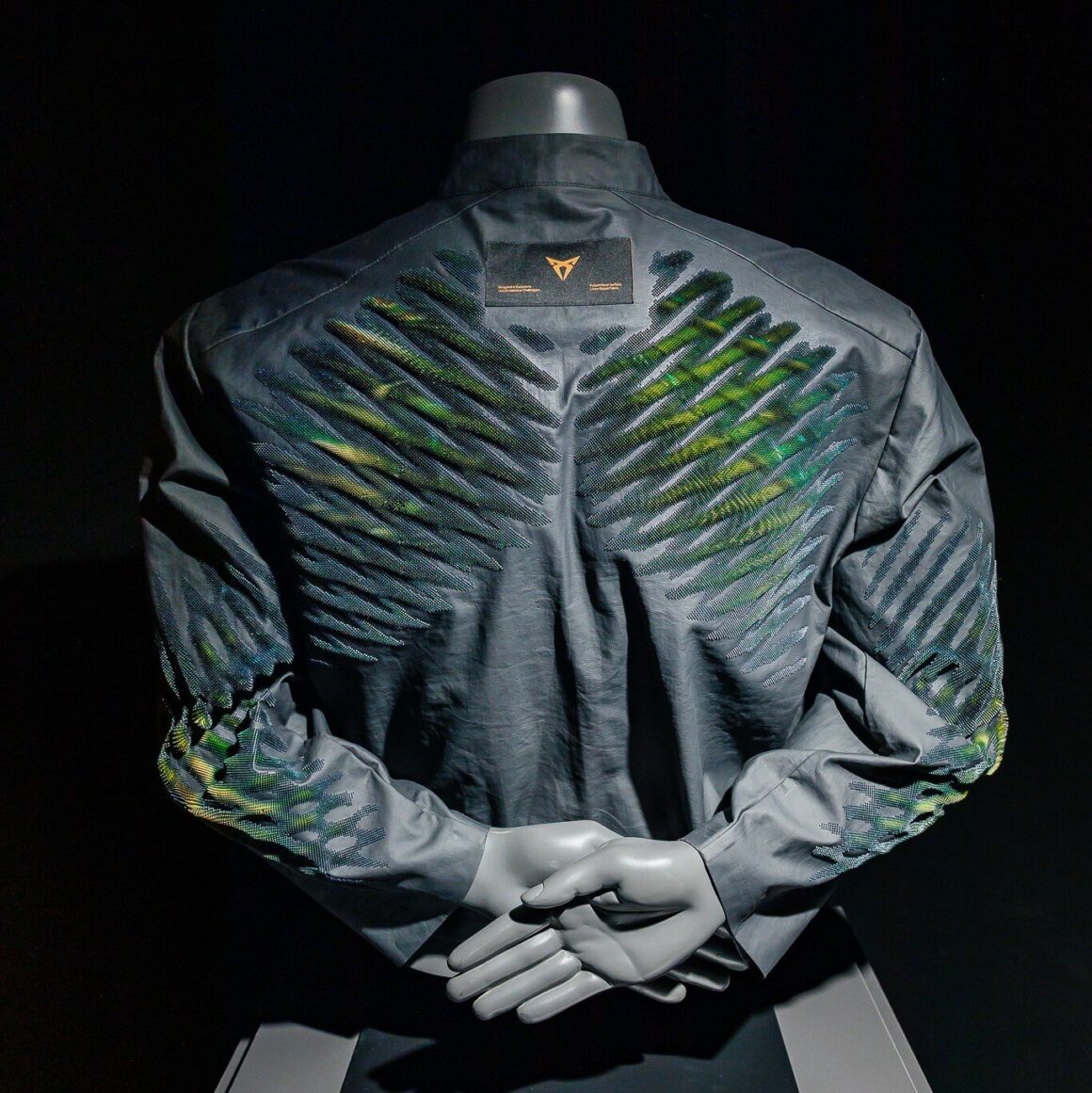
Francesca Sangalli: 3D knitting technology already existed in other industries but transferring it into automotive is complex. My goal was never to use technology as decoration, but to genuinely improve the product and the process.
We approached Tesca because of their proximity and openness. Together, we co-developed a completely new approach. In fact, they created a dedicated factory for CUPRA.
This was not a typical supplier relationship. We entered the manufacturing process itself, learning the logic of weaving, understanding binding structures, and co-designing materials from scratch.
Our team worked directly with digital tools like Grasshopper, sending data to Tesca, receiving samples, iterating in real time. This proximity allowed rapid loops, adjusting depth, transparency, color layering, and graphical effects.
It’s a completely new methodology, much more interactive and exploratory than traditional CMF development.
The CUPRA Raval is more than a concept, it’s a strategic signal. Through material innovation, digital integration and systemic disruption, CUPRA is not just designing cars; it is redefining the rules of automotive CMF for a new era.


