
By Laurent Serezat, DVN-I General Editor
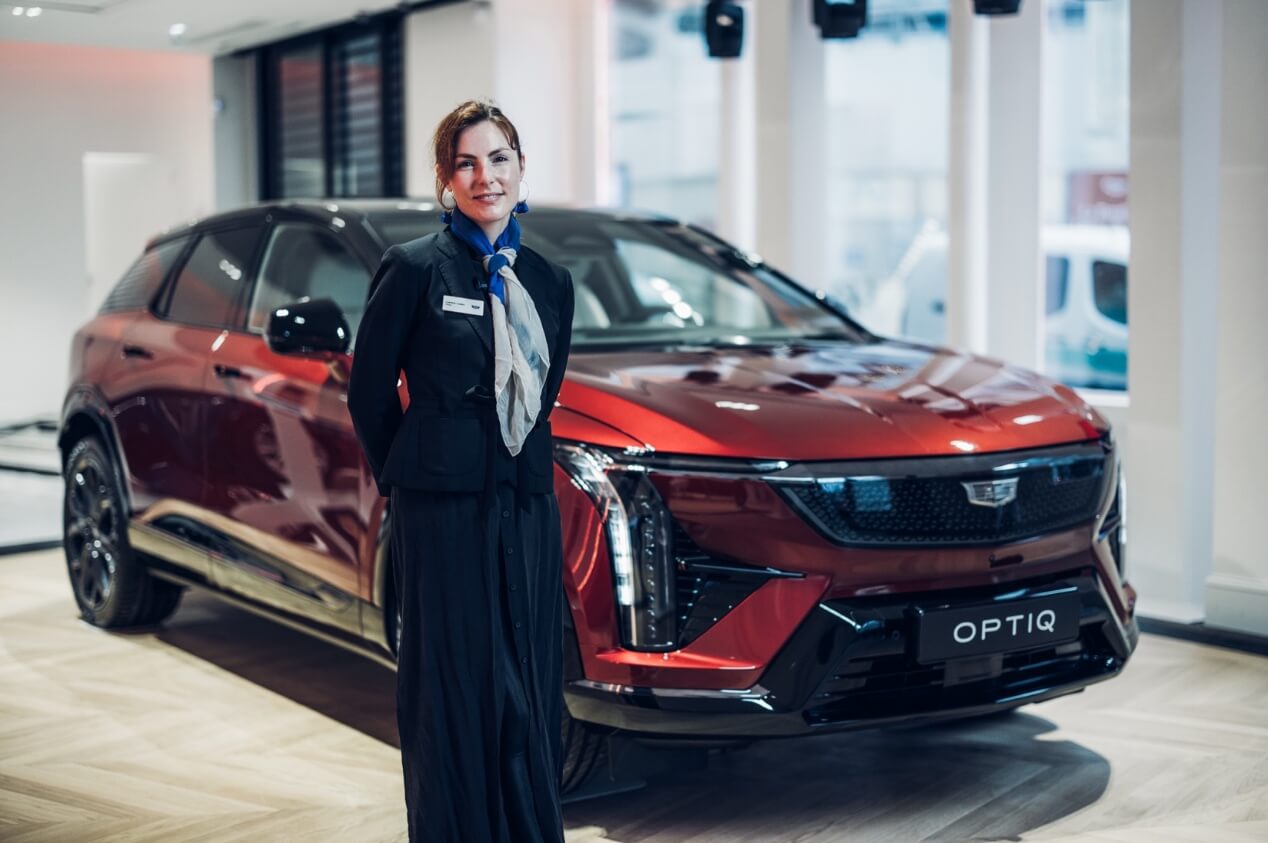
Laurent Serezat: Your career has taken you from interior design, jewelry and scenography to automotive CMF. How have these different creative worlds shaped your approach to vehicle interiors?
Laëtitia Lopez: My background across interior design, jewelry, and scenography design has fundamentally shaped how I approach CMF, not as a surface treatment, but as a narrative and sensory system.
Working with houses like Hermès and Mauboussin exposed me early to the importance of material authenticity, craftsmanship, and branding. High Jewelry, in particular, teached me precision at a micro level, how light interacts with surfaces, how textures and colors create desirability, and how materials carry symbolic meaning.
My experience with Andrée Putman brought a strong architectural dimension, thinking in terms of spatial experience and atmosphere placing the attention to details and client experience at the center of the design mindset.
The most important element across all is the emotional connection a product or a space can carry.
Today, I see the vehicle as a curated environment where materials are not only functional, but expressive. My approach is to create layered experiences, where color, material, and finish work together to deliver a coherent emotional journey, aligned with brand DNA and customer expectations.

L.S.: At Cadillac, you helped define a global CMF vision, from concept cars to production vehicles. What key lessons did you learn?
L.L.: At Cadillac, one of the most defining lessons was that CMF is fundamentally a storytelling discipline before it becomes an industrial one.
Every material, color, and finish has to express a clear and intentional brand narrative. Trends are not followed but created. Whether working on concept vehicles or production programs, the starting point was always: what story are we telling, and how does this translate into a tangible, sensory experience aligned with the customer needs? This was particularly critical when shaping the brand’s repositioning toward ultra-luxury, where CMF played a central role in expressing craftsmanship, innovation, and modernity.
From there, the challenge becomes ensuring that this narrative is not diluted as it scales. Storytelling only has impact if it is consistent across the entire portfolio, across regions, vehicle lines, and trim strategies.
The second key lesson is that scalability and feasibility must be the end goal. A compelling vision is only meaningful if it can be executed with precision and repeatability in an industrial context. This meant working in close alignment with engineering, purchasing, and suppliers very early in the process to ensure that materials, finishes, and innovations could meet quality, cost, and timing constraints.
Ultimately, the balance lies in creating a vision that is both emotionally resonant and operationally robust, where storytelling drives desirability, and industrial rigor ensures credibility and consistency at scale.
L.S.: How can CMF transform the customer experience in tomorrow’s vehicles?
L.L.: CMF is to me the most powerful drivers of customer perception and differentiation.
As vehicles evolve, the traditional performance differentiators are becoming less visible. This creates a unique opportunity for CMF to shape how customers perceive quality, innovation, and brand values.
In the future, interiors will increasingly be experienced as living spaces. CMF can elevate this by creating multi-sensory environments, through tactility, light interaction, acoustic properties, and materials.
Customization will also play a key role. Customers are no longer just buying a product, they are seeking self-expression. CMF enables this through curated personalization, allowing brands to create deeper emotional connections.
Ultimately, CMF transforms the vehicle from a functional object into an experiential platform who has the potential to become an extension of the customer unique expression.


L.S.: Sustainability is now a central challenge, but it also needs to remain desirable, high-quality and credible. How do you see responsible materials evolving in automotive interiors?
L.L.: Sustainability is evolving from nice-to-have to a creative driver.
Through my experience, including founding LMNT Art, where I transform leather off-cuts into art pieces and jewels, I’ve seen how constraints can unlock new forms of creativity and value.
In automotive, the next step is to move beyond “hidden sustainability” toward visible and desirable responsible materials. Customers need to understand and feel the value, not just be told about it.
This means developing materials that are not only lower impact, but also premium in perception, whether through unique textures, natural variations, or innovative finishes.
At the same time, credibility is key. Sustainability claims must be supported by real industrial feasibility, supply chain transparency, and long-term durability.
Looking ahead, I believe we will see a shift toward materials that combine performance, circularity, and strong aesthetic identity, where sustainability becomes an integral part of the experience.

L.S.: The role of CMF seems to be evolving from a finishing function to a strategic lever. How would you define the new role of CMF in automotive design?
L.L.: CMF is no longer a supporting function, it is a strategic pillar of product and brand development.
CMF sits at the intersection of design, engineering, marketing, and sustainability. It can influence not only how a product looks and feels, but also how it is perceived, positioned, and valued.
It translates brand identity into tangible experiences, aligns cross-functional teams (internally and externally) around a shared vision, and brings coherence across complex product portfolios.
It is also increasingly involved upstream in the process, contributing to product strategy, innovation roadmaps, and even business decisions such as trim structure or personalization models.
CMF is now a key tool for differentiation, storytelling, and value creation.
L.S.: What motivated you to join DVN Interior?
L.L.: Joining Driving Vision News Interior was a natural extension of my career.
Throughout my experience, I’ve always valued cross-functional dialogue and knowledge sharing. DVN offers a unique platform to connect designers, engineers and suppliers around the key challenges shaping our industry.
My motivation is to contribute to elevating the conversation around CMF, design strategy, and customer experience, bringing a perspective that combines luxury, industrial expertise, and global brand thinking.
I also see this role as an opportunity to bridge different worlds, OEMs, suppliers, and startups, and to highlight emerging trends, materials, and manufacturing processes that will define the future of mobility.
For DVN members, I aim to bring:
- a strategic vision of CMF
- insights into luxury and bespoke experience design
- a strong understanding of global brand building and portfolio coherence
- and a forward-looking perspective on sustainability and material innovation
Ultimately, my ambition is to help foster more integrated, meaningful, and future-ready design approaches across the industry.


