

By Laetitia Lopez | CMF, Strategy and Branding Consultant
Haus of Automotive Milan Tortona District
Hosted during Milan Design Week, the KonzeptHaus CMF Conference brought together leading voices across automotive, fashion, materials and design strategy to explore one central question: how is CMF evolving in response to systemic shifts in technology, sustainability and culture?
Far from a trend recap, the conference positioned CMF as a strategic discipline at the intersection of design, engineering and brand, with increasing influence across the entire product lifecycle. From AI-driven materials to circular manufacturing and cross-cultural design intelligence, the discussions revealed a field in transformation, moving from surface treatment to holistic experience design.

Humanizing Technology: CMF in the Age of AI
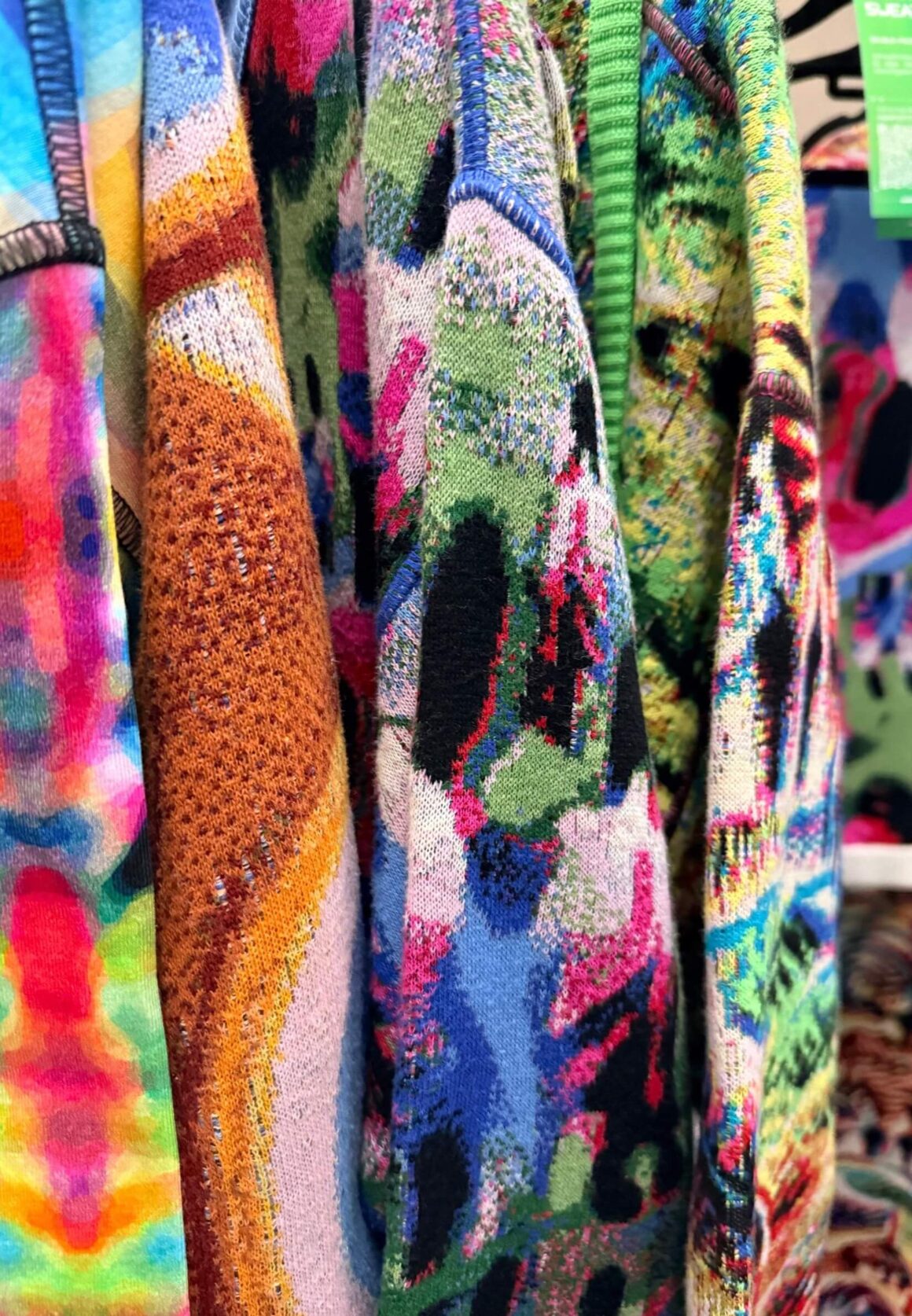
The opening session set the tone with a critical reflection on artificial intelligence, not as a threat, but as a design material in itself. Rachele Didero, through the brand Capable Design, explored how AI is reshaping both creative processes and human perception, urging designers to move beyond passive adoption and actively shape its integration.
A striking example discussed was AI- generated “camouflage” textiles, materials designed to be invisible to AI systems while remaining highly visible to humans, opening potential applications in mobility and aerospace.
The underlying message was clear: CMF designers are no longer just specifying finishes—they are defining how humans interact with intelligent systems.

Trend scouting in CMF – Spotting what matters
In a landscape saturated with visual stimuli, trend scouting is shifting from inspiration gathering to strategic filtering and anticipation.
Across the panel, speakers emphasized that trends should not dictate design decisions. As Rossella Guasco stated, “trends are not the starting point”, CMF must first translate brand identity, with the customer as the constant reference.
This sentiment was echoed by Mark Gutjahr, who reframed the role of designers: “It is not
about chasing something but anticipating a change.”
Key directions identified included:
- Regeneration and sustainability as long-term drivers
- Transparency and traceability in materials
- A renewed focus on craftsmanship and human interaction
- The importance of cross-industry support and inspirations
Crucially, CMF is evolving toward experience-led design, where “materials are the experience,” reinforcing its growing strategic value.
Digital transformation in CMF – What changed after a year?
One of the most significant shifts discussed was the impact of digital tools, not just in visualization, but in shaping design outcomes.
According to Francesca Sangalli, digitalization is enabling CMF to influence geometry itself: “CMF can influence the shape through digitization… you are not covering surfaces anymore, you are designing them from the beginning.”
This marks a fundamental transition from decorative layering to integrated design logic, particularly visible in projects like the CUPRA Raval, where digital tools directly informed material expression and manufacturing processes.
At the same time, speakers highlighted a need for balance. While AI accelerates ideation and communication, it lacks human judgement and taste. As Marie-Camille Lecoq noted, designers must remain critical: AI is a tool, not a replacement.
The consensus: adaptability is the new core skill, with designers required to navigate both physical and digital ecosystems seamlessly.
Sustainability in CMF – Trend or necessity?
Sustainability emerged not as a trend, but as a non-negotiable framework, yet one still facing significant implementation challenges.
As highlighted by Britta Morel, the industry remains in a transition phase: while material innovation is advancing, scalability, cost and supply chain integration remain barriers.
Sabine Pannetrat contextualized the urgency, referencing planetary boundaries, most of which have already been exceeded, reinforcing the need for systemic change rather than incremental improvement.
Key themes included:
- The rise of circular systems (e.g. mycelium, 3D-printed textiles)
- The importance of cross-functional alignment to enable implementation
- A shift toward accepting imperfection as a marker of authenticity
Notably, sustainability is also becoming a regulatory driver, with tools like digital product passports accelerating adoption across Europe.

CMF across culture – USA, Europe and Asia
The conference sharpened the conversation around cultural intelligence by highlighting not just differences in taste, but a rapid evolution in perceived quality, particularly in China. As noted by Amy Frascella, there is now a clear recognition that China is no longer a cost-driven benchmark but a quality-driven manufacturing powerhouse, with global brands leveraging its expertise not for savings, but for execution excellence.
Across the three key regions, distinct CMF dynamics are emerging:
- China: A market defined by high expectations of material quality and perceived value. Traditional premium cues, such as leather, remain dominant, while sustainable materials like recycled textiles are less culturally embedded. There is also a strong focus on health and safety, influencing material acceptance and validation processes. At the same time, color plays a more expressive role (e.g. preference for purple over green), and interiors are expected to feel domestic and comforting rather than purely functional.
- Europe: More receptive to sustainability narratives and material innovation, including recycled and bio-based solutions. There is a growing appreciation for craft, imperfection and authenticity, positioning CMF as a storytelling tool. However, the challenge remains to align these values with scalability and cost.
- North America: A comparatively conservative market, where familiar codes, such as black interiors, still dominate. That said, brands like Rivian are challenging this norm by building identity through distinctive color strategies (e.g. strong use of green) aligned with outdoor lifestyles.
The key strategic takeaway is that global CMF cannot be standardized. Brands must define a strong core identity, but adapt its expression locally, balancing aspiration, cultural relevance and evolving perceptions of quality. Increasingly, this requires designing not for demographics, but for mindsets and lived experiences, supported by deep cultural immersion.
Feasibility in CMF – Bridging Vision and Reality
While creativity remains central, the conference reinforced that CMF innovation only succeeds if it can be industrialized.
Challenges around lead times, supplier capabilities and internal alignment persist, particularly in automotive where development cycles are long and complex. As Claudia Fräßdorf noted, designers must increasingly develop skills in communication and persuasion to align stakeholders across engineering, sourcing and marketing.
At the same time, there is a growing need to protect creative space within organizations, enabling experimentation while maintaining feasibility.
The convergence of industries was also highlighted, with fashion and automotive learning from each other, particularly in speed, material innovation and prototyping approaches.

CMF Signals – A platform for innovation
The closing session reframed CMF as a driver of industrial and environmental innovation, illustrated through two distinct yet complementary case studies.
Desserto, presented by Adrian Lopez Velarde, showcased a regenerative approach to materials. Their plant-based alternative, developed from cactus grown in arid regions, demonstrates how CMF can activate underutilized ecosystems, producing materials with low water consumption and reduced environmental impact. The key message: sustainability must be embedded at the source of the material, not just in its application.
In contrast, WeDO Art, represented by Diego Quetti, explored a craft-driven, small-scale model, focusing on the valorization of waste. By repurposing material remnants, such as wood offcuts, into new design pieces, the studio highlights how CMF can operate within a circular logic at a micro-industrial level, where creativity and sustainability are intrinsically linked.
Despite their different scales, both approaches converge on a shared principle: CMF is no longer about selecting materials, but about redefining material systems, from sourcing and production to end-of-life.
The broader takeaway is that innovation in CMF will come from rethinking how materials are grown, transformed and reused, positioning designers as key contributors to systemic change rather than final-stage decision-makers.

Key Takeaways
CMF is evolving from surface to system, influencing form, function and experience:
- AI and digital tools are enablers, but require strong human judgement
- Sustainability is a structural requirement, not a narrative layer
- Cultural intelligence is critical for global product relevance
- Feasibility and collaboration remain key to translating vision into reality
As the discussions at the KonzeptHaus conference made clear, CMF is entering a new phase, one defined by integration, responsibility and influence. For designers, the challenge is no longer just to create desirable materials, but to shape the systems in which those materials exist.


