
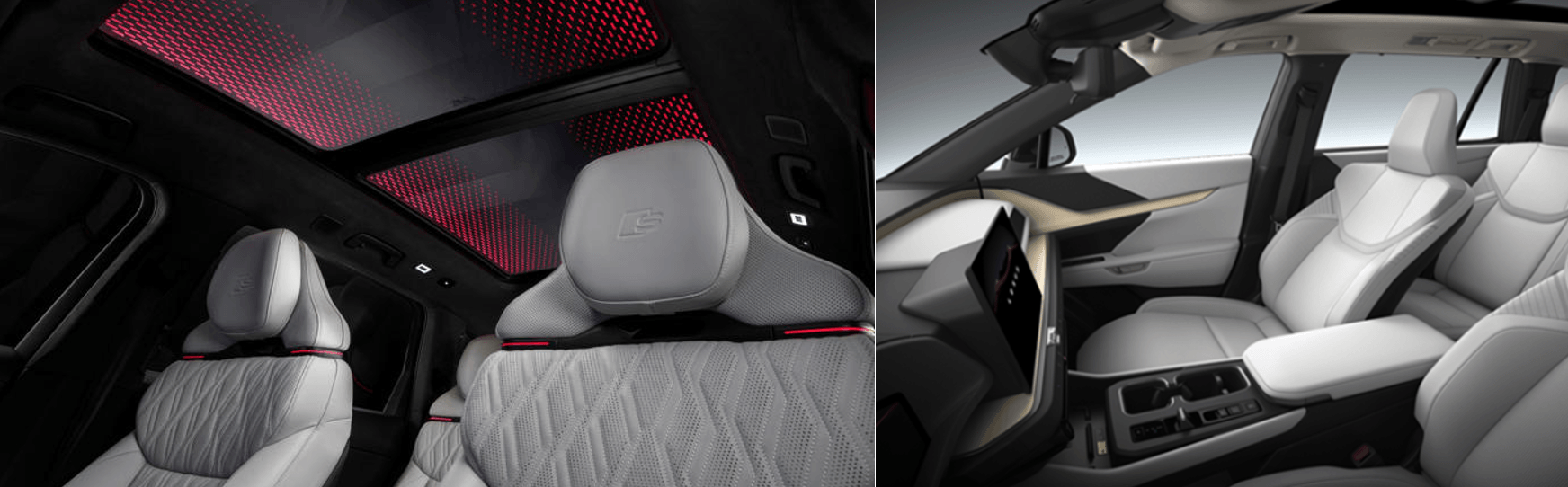
The in-car experience doesn’t begin or end with the screen(s), no matter how many or how large. The experience comprises everything visible and tangible: the texture of a handle, the look of a trim surface, the sound and feel of a switch. They all sum up to a feeling that an interior was designed by someone who understands and cares (or by someone who doesn’t, or by someone who does but had an oops).
The Milan CMF Conference confirms what many of us have felt for years: CMF is no longer just a set of final touches, but a fundamental architectural anchor. It’s integral to form, perceived quality, sustainability, local culture, and the way occupants interact with the machine. Read all about it in our DVN Report on the Milan event.
The Renault 4 JP4x4 concept delivers a lesson in low-tech emotion. Textile surfaces, seats with inbuilt headrests, a floating centre console, open-air configuration: everything looks simple, but a lot of careful thought and effort went into it; nothing is naïve. Lexus, with the TZ, takes the opposite route: bamboo, fragrances, synchronized lighting, hidden switches, and a loungelike cockpit. Are these two opposing visions? Not really; in both cases, materials become interface.
We have spent fifteen years digitalizing the cabin; now we must re-humanize it – not by adding decoration, but by giving meaning back to materials. In today’s context (and even more in tomorrow’s), CMF is credible only when it connects desireability, feasibility, traceability, and emotion.
Questions or comments? Contact Emilie Bonnet or Laurent Sérézat. We’re listening!
Take care,



