WeRide has spent nine years building a company that looks broader than a conventional robotaxi developer. Its Level 4 portfolio includes robotaxis, robobuses, robovans and road sweepers. It sells L2+/L3 systems to vehicle manufacturers and supports the complete stack with its own AI infrastructure. CEO Tony Han says the common product is the autonomous driver, while each application uses a different commercial model.
Robotaxis now carry most of the growth. WeRide’s global Level 4 fleet passed 3,400 vehicles at the end of July, including more than 1,800 robotaxis. The fleet added about 600 vehicles from April to July, and roughly 500 of those additions were robotaxis. The company targets 5,000 Level 4 vehicles by the end of 2026, including 2,600 robotaxis.
The second-quarter accounts show why the international business matters. Revenue reached 231.7 million yuan (~35 million dollar), up 82 percent from a year earlier. Gross margin rose to 37.5 percent. Overseas revenue grew 164 percent and approached 40 percent of group revenue. Operating expenses rose much more slowly than revenue, but the company still recorded a net loss of 400.7 million yuan (~60 million dollar) and spent about 434 million yuan (~65 million dollar) on research and development.
Outside China, WeRide usually follows an asset-light structure. Local partners can buy, depreciate, maintain and operate the vehicles. A ride-hailing platform supplies demand. WeRide localizes the driving system, leads the permit work and licenses the virtual driver. The company receives recurring technology service fees and mileage-based payments without carrying the complete vehicle fleet on its balance sheet.
Abu Dhabi shows how that structure works in practice. WeRide and Uber coordinate deployment plans and expand operating zones as demand grows. A local transport partner handles fleet operations. WeRide says its overseas robotaxi fleet doubled from about 200 to about 400 vehicles during the quarter. Its wider Middle East plan with Uber targets 1,200 robotaxis through 2027.
The economic claims need careful reading. WeRide estimates normalized annual technology service revenue of 40,000 to 50,000 dollars per robotaxi at steady-state utilization. This is not a realized average. Han said the Middle East business is close to regional break-even after local operating and management costs. In China, 19 to 21 daily rides can cover vehicle operation, electricity and parking, but not allocated research cost. He expects European operations to benefit from higher taxi fares and believes some markets can be profitable from the start. That expectation has not yet been proven in a European public service.
Permits are the company’s main defense against becoming a replaceable software supplier. CFO Jennifer Li summarized the position in the earnings discussion with a simple line. “Not everyone can get the regulatory permit.” WeRide holds autonomous-driving licenses in eight countries and argues that each completed approval helps the next market understand its evidence.
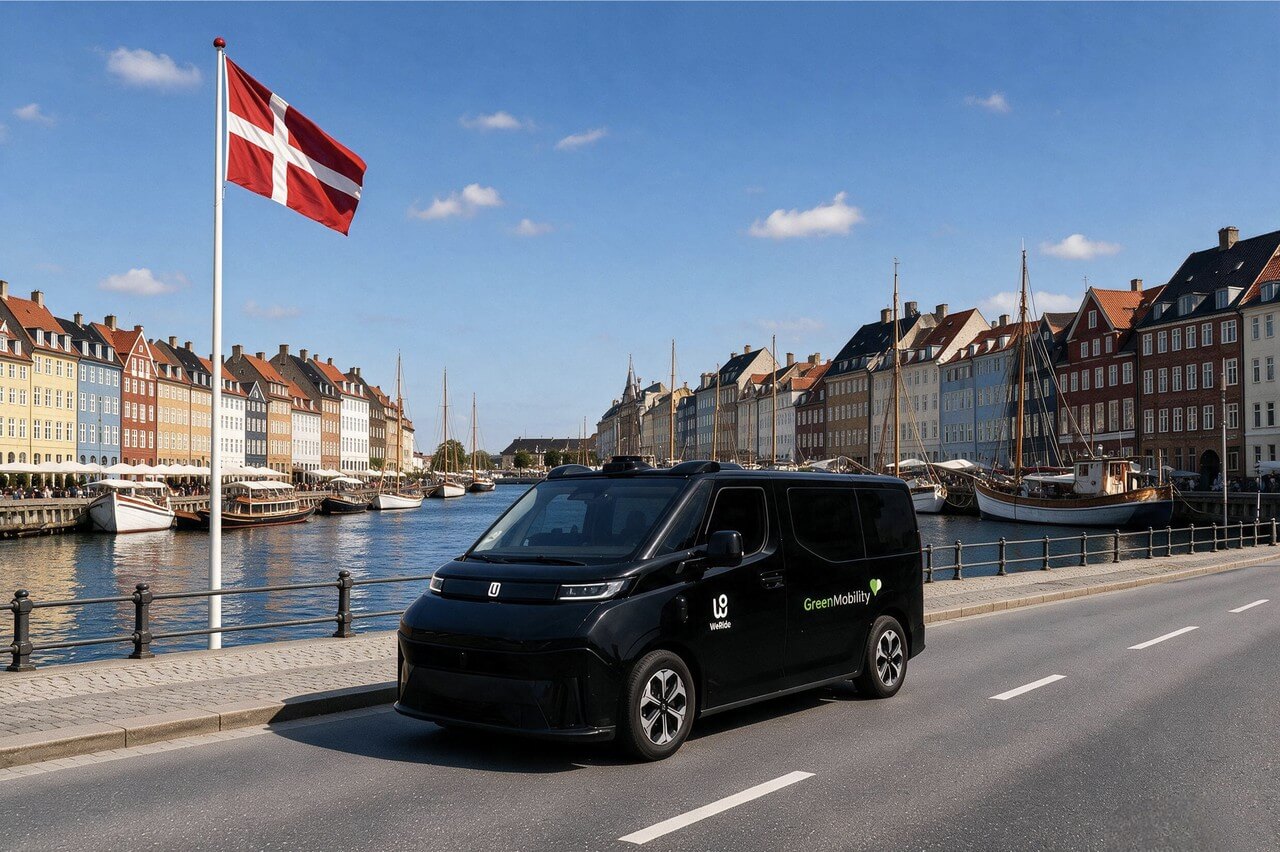
Europe is the next test. WeRide and GreenMobility aim to open a public GXR service in Denmark in the first half of 2027, subject to approval. GreenMobility brings a local base of 1,500 shared electric vehicles and experience from millions of trips. WeRide brings the driver, regulatory work and localization. Han says city selection depends on population, taxi supply, regulatory openness and whether automation addresses a real labor or mobility gap.
The Autonomy Insiders discussion reveals a second part of WeRide’s strategy. Most production ADAS companies start with L2 or L2++ and plan to remove the driver later. This gives them OEM revenue and large-scale vehicle data, but supervised operation does not prove that the system can handle every failure without human help. It also does not create the redundancy, remote support, permits and fleet processes needed for a driverless service.
WeRide chose the opposite direction. It started with the harder Level 4 problem and then adapted the stack for production ADAS. Han calls this a projection from a higher-dimensional problem into a narrower one. The move still requires cost optimization, vehicle integration, mass-production engineering and different verification. He describes the reverse move from L2++ to L4 as lifting. In his view, adding responsibility to a system designed around an available driver creates a separate safety and operating challenge.
Han proposes a practical qualification test for both directions. WeRide must show that its Level 4 technology can enter mass-produced customer vehicles. L2++ companies should place at least 100 driverless vehicles in a public service for six months without a severe accident or regulatory halt. This is WeRide’s own test, not an industry standard, but it explains why the company treats real driverless operation as evidence that cannot be replaced by ADAS mileage alone.
The same reuse rule explains WeRide’s vehicle choices. Robobuses operate in urban traffic and share much of the perception, prediction and planning stack used by robotaxis. They also address a clear European problem. Small cities face high public-transport costs and shortages of bus drivers, while municipalities can own and maintain the vehicles. Robovans and sweepers reuse similar urban-driving capabilities.
WeRide has avoided heavy freight and mining trucks. Han says highway trucks require different control and planning behavior from the sedans and SUVs at the center of WeRide’s stack. Mining vehicles add unstructured roads and another operating environment. Entering those segments would weaken the company’s principle of using one core algorithm with limited adaptation across products. The company will add a vehicle category only when the existing stack transfers without a separate technology branch.
WeRide is not yet profitable as a group, and many fleet targets remain forward-looking. Its advantage is that the business model is becoming visible. Local partners provide vehicles and operations. Uber provides demand. WeRide provides the driver and the permit. The next two years will show whether that structure can keep its economics when the overseas fleet grows from hundreds to thousands.