
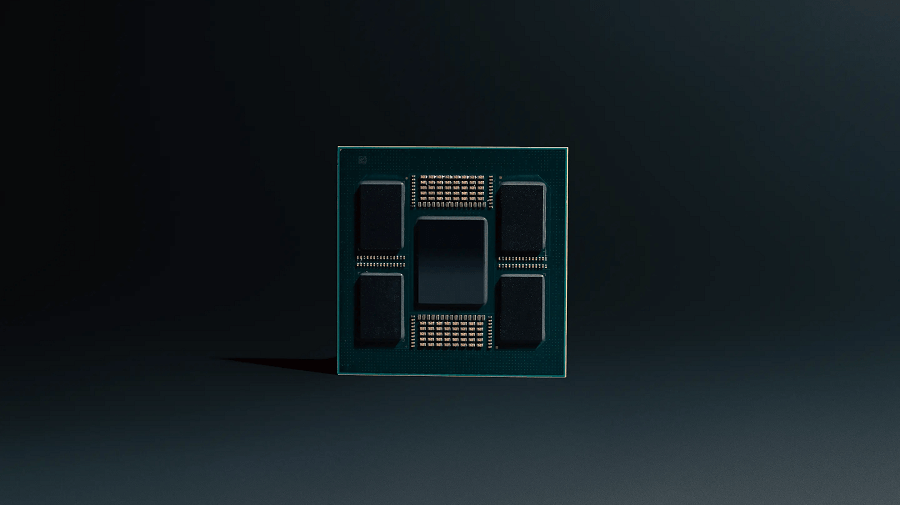
Waymo has disclosed its first purpose-built chip for the front end of the Waymo Driver. The 5 nm application-specific integrated circuit processes raw camera, lidar and radar data and runs machine learning models before information reaches the main driving computer.
Waymo says its custom front-end ASICs deliver more than 1,000 TOPS. This places the disclosed front-end compute in the same nominal class as Nvidia DRIVE Thor. The figures are not directly comparable because Waymo has not disclosed the numerical precision, number of ASICs or power consumption behind its claim.
Table 1. Published peak AI compute for selected automotive platforms
| Platform | Published peak performance | Primary role |
| Waymo custom ASICs | More than 1,000 TOPS | Sensor front-end and ML processing |
| Nvidia DRIVE Thor | Up to 1,000 INT8 TOPS or 2,000 FP4 TFLOPS | Central automotive compute |
| Horizon Journey 6P | Up to 560 effective TOPS | ADAS and automated-driving SoC |
| Nvidia DRIVE Orin | Up to 254 INT8 TOPS | Current-generation central compute |
| Mobileye EyeQ Ultra | 176 TOPS | Purpose-built autonomous-driving SoC |
Note. Vendor figures use different numerical precisions, sparsity assumptions and system boundaries. They are not direct performance benchmarks. Waymo has not disclosed the precision, ASIC count or power consumption behind its figure.
Its real significance lies in co-design. Waymo develops sensors, algorithms and compute as one system. The chip performs functions such as temporal denoising for low-light perception and supports real-time processing from 13 high-resolution cameras. Custom accelerators handle different neural network workloads, while CPUs, GPUs and other components remain part of the wider heterogeneous platform.
Waymo frames the design around three requirements. Decisions must be processed onboard with low latency. The hardware must tolerate vibration, shock and extreme temperatures. The complete system must remain redundant because no human driver is available to take over. Two independent compute units run in parallel, and either unit can assume the load after a fault.
The company says raw compute power has increased twentyfold in eight years. The system is integrated with vehicle liquid cooling and is designed to reduce the time from sensor input to actuation. This makes the compute architecture part of the vehicle platform, not a box that can be selected late in development.
Waymo has not abandoned external suppliers. It names AMD, Micron, Nvidia, Samsung, SanDisk, Socionext and TSMC as partners. The custom chip therefore marks selective vertical integration. Waymo controls components that affect sensor fidelity, latency and safety while using established suppliers for the wider compute system.
The missing number is cost. Experts estimate that the sixth-generation hardware is far below the cost of the previous generation, but Waymo has not confirmed numbers. The commercial test is whether custom silicon reduces energy use and system cost enough to support larger fleets without weakening redundancy. The disclosure shows that robotaxi competition is moving deeper into the hardware stack.