
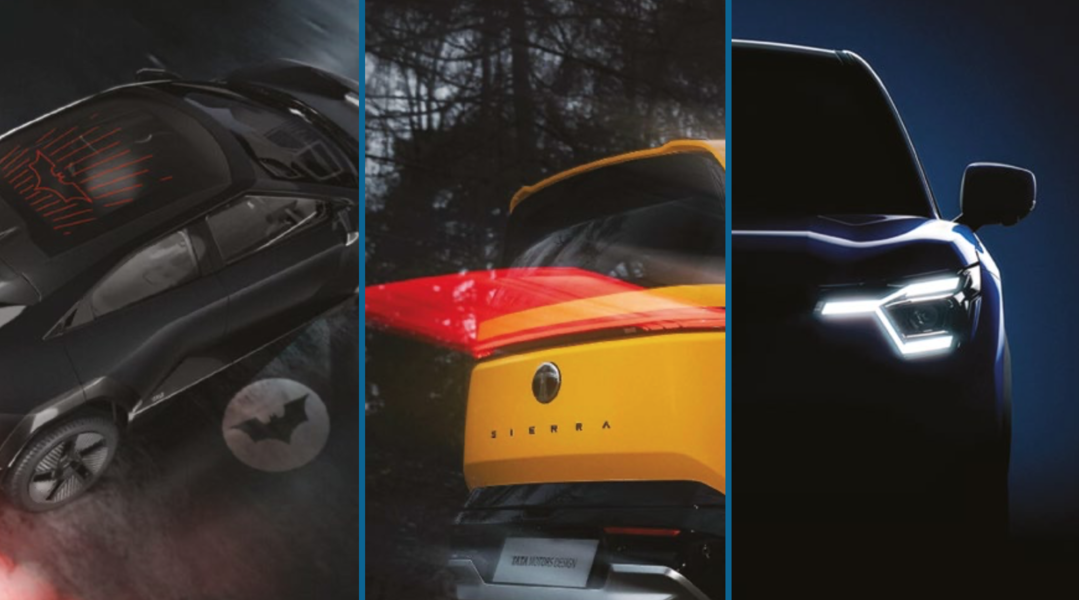
DVN is heading to India for the third time this fall to continue examining and participating in the vehicle lighting r/evolution happening there. Today we bring you our first docket for the event, which will be in Delhi on 28 – 29 October. It’s in accord with our ongoing practice of organizing an event in India every other years, alternating with Japan. We are looking forward to meeting all of you who work not only in lighting for cars and trucks, but also for the 2- and 3-wheelers so important in the Indian market, and for commercial vehicles. All these pieces of the puzzle make the Indian market really special. And for the first time at a DVN event, OEM CTOs (Tata and Maruti) will share their insights into how lighting plays a major role in the vehicle technology shift in India.
Of course, one of the main things going on is the increasing importance LED technology holds for car buyers. I see several main reasons:
- Safety. Anybody who has been to India knows you need good lights. The better the lighting – the greater the headlight beams’ width and reach – the safer you will be in India’s extremely mixed traffic: motorized and person-powered vehicles, pedestrians, animals, potholes, and difficult road and road-lighting conditions. Lighting tier-1s are developing beam patterns specific to India’s conditions.
- CO2 emissions. Pollution is a really big topic in India, with big cities experiencing severe smog during much of the year. Any bit of fuel not burned helps cut down on smog and CO2, even if it’s a minor reduction due to LEDs instead of bulbs.
- Price and design. The time when LEDs were only for premium cars is gone; Indian manufacturers have found solutions to dramatically cut the cost. Most vehicles are now equipped with LEDs, which help make vehicle designs seem fresh and desirable. So clearly, design is a major driver of LED proliferation.
What else goes into the equation? With LEDs we have increased glare; there’s much more flux in the beam, and the lamps are smaller and bluer than before. We are all facing this issue in our daily life, no matter where in the world we live, work, and drive. So it’s happening in India, too; extra much due to customer habits and unfavourable road geometries. Solutions exist – automatic high beam activation, ADB, automatic levelling, automatic aiming, etc – and these topics will certainly be discussed during the event. Regulators are aware of the concerns and will join the event for an open discussion with industry.
We at DVN are happy to partner with ARAI for this event. I am glad to publish our pre-event discussions to have their views about lighting evolution
The vehicle industry is highly active in India, including the vehicle lighting sector. Global OEMs and suppliers have big teams in India to support their worldwide vehicle development. Bengaluru has become a major hub for software developers. Definitively India is an automotive country.