
We talk about artificial intelligence, intelligent cockpits, and interfaces capable of anticipating driver expectations. But wouldn’t it be more useful to have a car that starts by understanding us better?
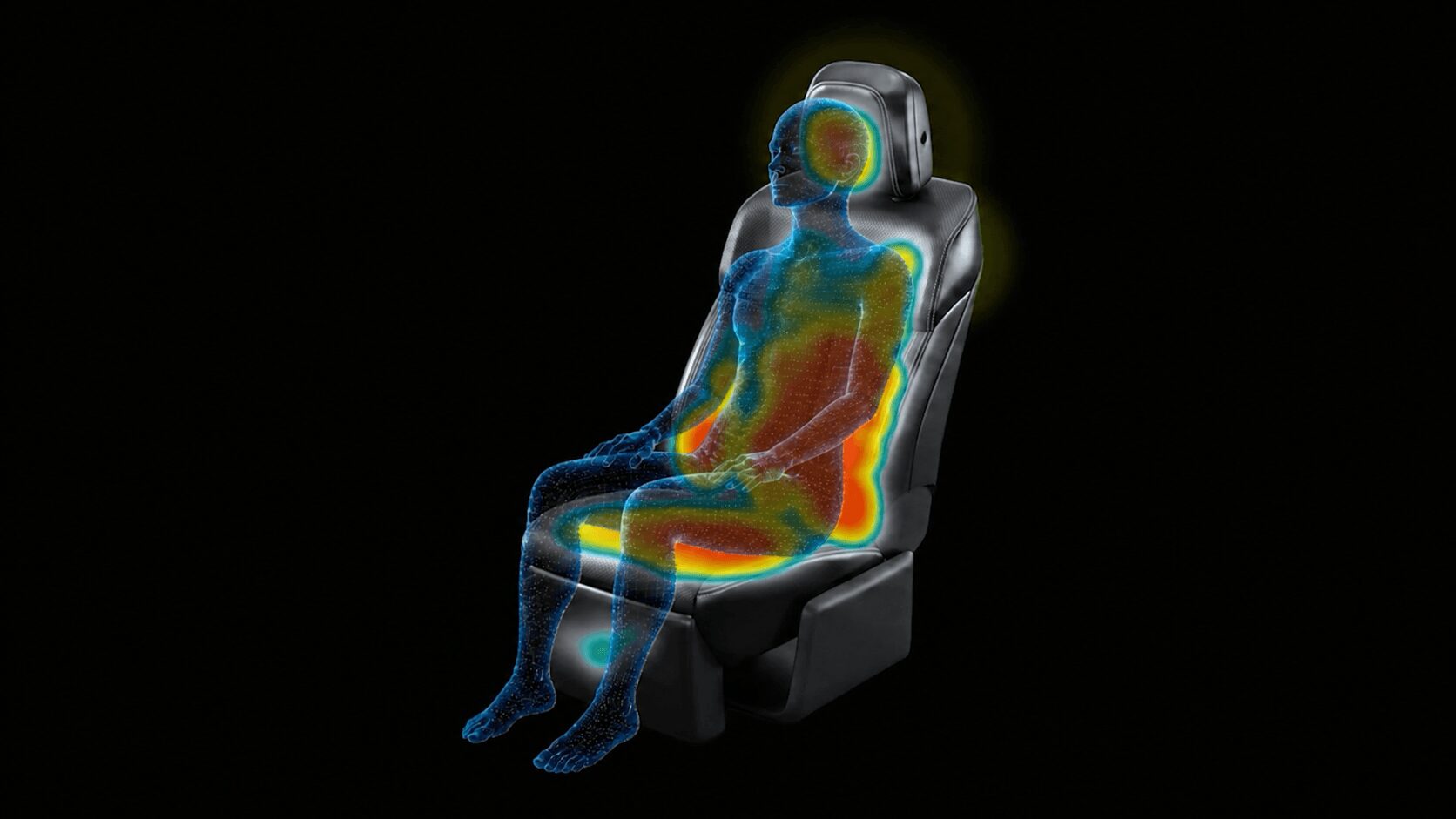
The seat is certainly one of the best places to start. It is the component with which we maintain the longest physical contact. It supports our body, follows our movements and provides a valuable opportunity to collect information about occupancy, posture, comfort and potentially certain signs of fatigue.
The integration of sensors, actuators and embedded electronics is transforming the automotive seat from a predominantly mechanical assembly into a mechatronic system, capable of both sensing and responding to its occupants.
Beyond traditional electrical adjustments, heating, ventilation and massage functions, new sensing technologies could enable seats to identify changes in posture, adapt support to individual needs or contribute to occupant monitoring systems. Haptic actuators can also communicate safety warnings through targeted vibrations, offering an alternative to visual or acoustic alerts.
And seats are just one example. Heated armrests, interactive surfaces, functional lighting, and sensory interfaces illustrate how mechanics, electronics, materials, and software are converging to create new interactions between occupants and their environment.
Particularly intriguing is the possibility of moving from a cabin that simply executes commands to one that adapts to real needs. Comfort could be become more responsive to different occupants, their activities, and the duration of their journeys, while safety functions could benefit from a more detailed understanding of what is happening inside the vehicle.
For decades, we have asked drivers and passengers to adapt to their cars. Mechatronics now offers the possibility of reversing that relationship.



