
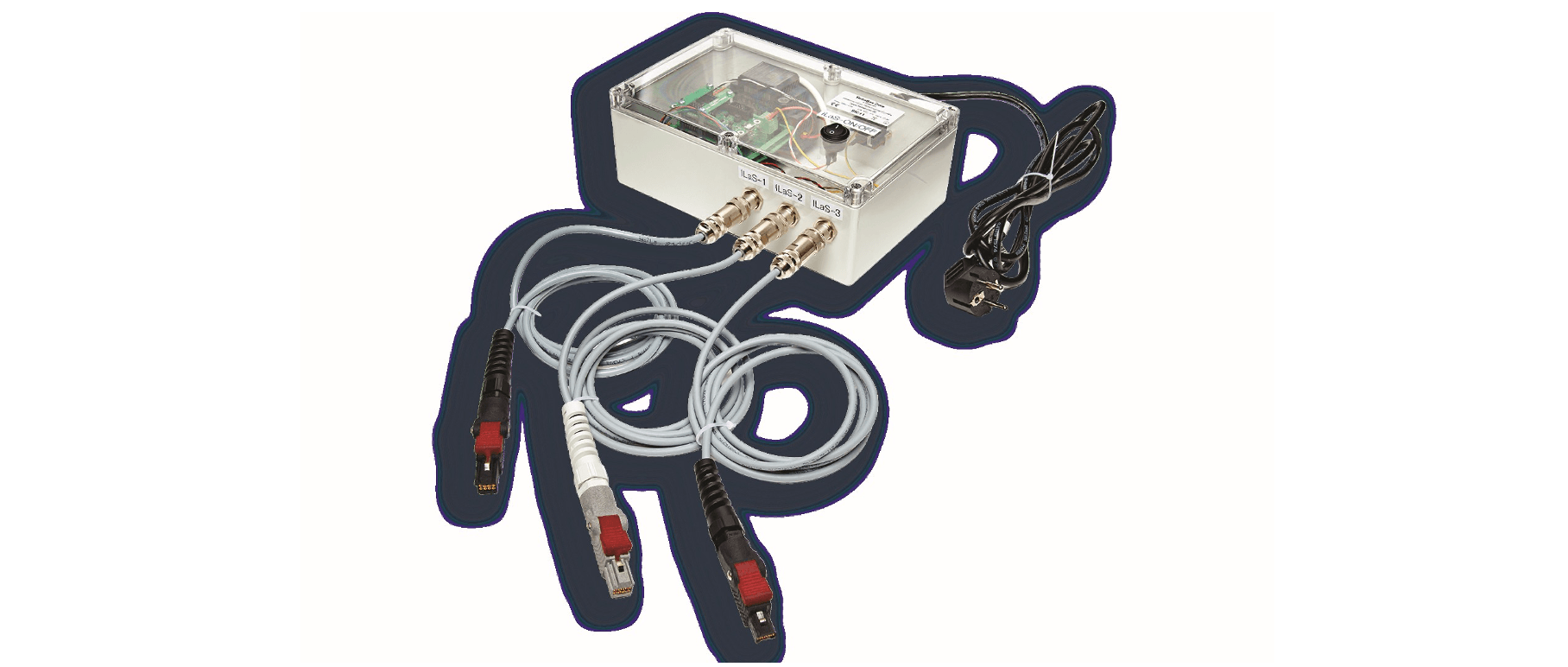
Hebatronic are developing a diagnostic solution based on their Hebabox platform, to help users get the full practical value out of ISELED and ILaS-based vehicle lighting systems.
With lighting networks such as ISELED and ILaS comes a new challenge: users need a practical way to understand what is happening inside the lighting network. If a system does not work as expected, the cause may be a missing LED node, a wiring issue, a communication problem, incorrect topology, a power supply limitation, or an electrical issue in one of the RGB channels. Without a dedicated diagnostic tool, troubleshooting can become time-consuming and difficult.
Hebatronic’s Hebabox-based diagnostic system is designed to translate the technical information available in an ISELED or ILaS network into clear, human-usable diagnostic results. Instead of expecting the user to interpret raw bus data or low-level status information, the Hebabox solution provides a simple and understandable result: pass, warning, or fail, supported by an error code and information about the affected node, branch or function.

The key advantage is that Hebatronic makes practical use of the bidirectional capability of the ILaS bus system. Aside from its LED-control functions, ILaS provides a way to read back information from the lighting network. This two-way communication is essential to unlock the full potential of the technology. It allows users to create advanced lighting effects, and to verify, diagnose and understand the system behind those effects.
For vehicle lighting developers, this means faster commissioning and more structured debugging. For validation teams, it means repeatable test results and clearer fault isolation. For service and support teams, it means less guesswork and a more direct path to the root cause. And for end customers and system integrators, it means higher confidence that the lighting system is behaving as intended.
Hebatronic’s diagnostic workflow includes network initialization, topology verification, communication checks, status readback, temperature-related information and RGB-channel plausibility evaluation. A detected lighting network can be compared against a validated reference profile. This makes it possible to detect missing nodes, unexpected topology changes, unstable communication paths or application-related issues such as voltage drops, connector problems or incorrect system assumptions.
A major practical benefit is that, for suitable topologies and defined test scenarios, this approach can reduce or even avoid the need for complex camera-based inspection systems. If the main task is to verify whether the correct nodes are present, communication is stable, the topology is valid and the RGB channels behave plausibly, an intelligent electrical and communication-based diagnostic method can offer a compact and cost-efficient alternative.
Each lighting application can be different: different LED generations, different topologies, different suppliers, different power supply concepts and different system expectations. The Hebabox diagnostic concept therefore evaluates information according to defined profiles, validated limits and application-specific knowledge instead of applying one universal rule to all systems.
Hebatronic cofounder and sales director Uwe Heitzmann says, “With ISELED and ILaS, the lighting network itself becomes intelligent. To use the full potential of this technology, diagnostics must become intelligent as well. The real value of the two-way ILaS bus is not only that we can control light, but that we can also read back and understand what is happening in the network. That is exactly what our Hebabox diagnostic concept is designed for”.
Hebatronic positions the solution as a practical bridge between development, validation, service and future application-specific end-of-line testing. Based on the Hebabox platform, the diagnostic concept is intended to make ISELED and ILaS lighting systems easier to commission, validate, and support in real customer applications.


