
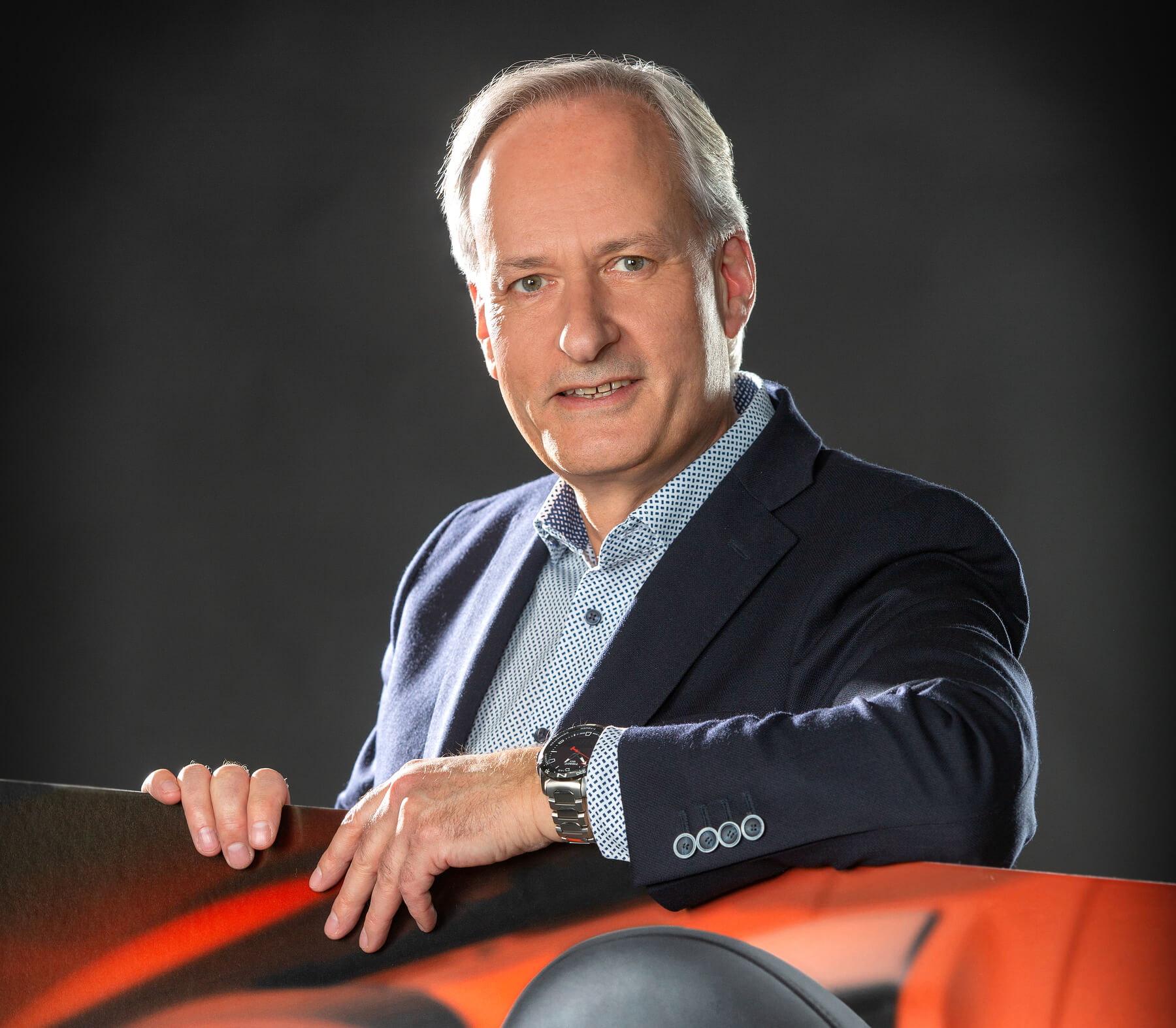
This week, I’d like to offer you a very different editorial. I wanted to share this interview with Andrew Leuchtmann, a leading expert in seating, who has joined our community of interior experts. I would also like to take this opportunity to thank him warmly, in keeping with the level of his expertise.
Laurent: After many years working in automotive seating, how do you see the role of the seat evolving within the vehicle interior?
Andrew: As you know, I am also deeply engaged with the history of the automotive seat. When you take into account, from this bird’s eye perspective, that humans have been sitting on their rolling vehicles ever since the invention of the wheel 6000 years ago – and intend to continue doing so in the future, entirely independent of the chosen propulsion concept – your question gains an even broader dimension.
From the seat’s point of view, the relationship with the combustion engine automobile was therefore only a brief liaison – the new relationship with electrically powered and autonomously operating vehicles, on the other hand, represents the promising future. This connection, by the way, is both highly motivating and reassuring for future generations of seat designers and engineers.
Starting from today’s state of the art, we will gradually see more of everything – more wellness, more flexibility, more safety, more design. Bright prospects indeed!
Laurent: What are the main technical and user-experience challenges facing seating development today?
Andrew: On the one hand, this concerns the movement of the seat within the interior. Hardware developers and suppliers of seat mechanisms have done an impressive job in recent years, enabling customers to move seats across the entire available cabin length and to rotate or recline them in any position. However, the resulting safety related question of which of these functions can be offered to customers during driving – and to what extent – has not yet been fully resolved. The draft legislation currently being discussed in China is just one interesting example of imminent external influences on the user experience.
On the other hand, overarching megatrends such as sustainability, longevity and AI are also challenging seat engineering — leading to progress in lightweight construction, sustainable materials, health monitoring functions and an even more enhanced comfort experience through individualized personalization.
Laurent: How are electrification, autonomous driving concepts and new mobility usages changing the way seat development and integration are handled by OEMs and suppliers?
Andrew: Fundamentally, the seating system of a car is already one of the largest, heaviest and most complex components of a vehicle, and it can account for up to 10 % of total manufacturing costs. In particular, its complexity will certainly not decrease under the influences you mentioned.
The higher, flat seat mounting surfaces located above the battery already require a further reduction of the “block height” – that is, the build height of the seat structure in its lowest position – in order to keep overall roof heights under control. This does not make the design of the moving seat any easier.
Zero gravity seating functions for all occupants, including the driver, and for all use cases – from a ten minute charging break to extended weekend leisure use to multi hour travel in an autonomously moving “living room environment” – also place significant demands on development.
We will therefore see OEMs and suppliers, as already happening in China, moving even closer together in Europe as well, with increasing standardization of structures, mechanisms and control electronics not only within OEM groups but also across OEM boundaries.
Laurent: What motivated you to join DVN Interior, what are your aspirations in this new role, and what do you believe you can bring to our members?
Andrew: I hope my answers have made it clear that even after 34 years in the field of seat development, I remain genuinely passionate about this fascinating component of the automobile. What could be more natural than contributing my accumulated experience to a renowned network of experts such as DVN Interior and exchanging ideas with like minded professionals.
I will therefore be glad to share the insights I gain from current developments in automotive seating and from my discussions with industry representatives in the form of concise Executive Summaries with DVN Interior members. In doing so, I will aim to incorporate both the broader context and appropriate historical comparisons as well.
This should create meaningful added value for all interested parties – especially for active members who are fully engaged in their professional lives and whose available time for additional seat related information intake is limited.
Questions, comments, suggestions? Contact Emilie Bonnet or Laurent Sérézat.
Take care,



