
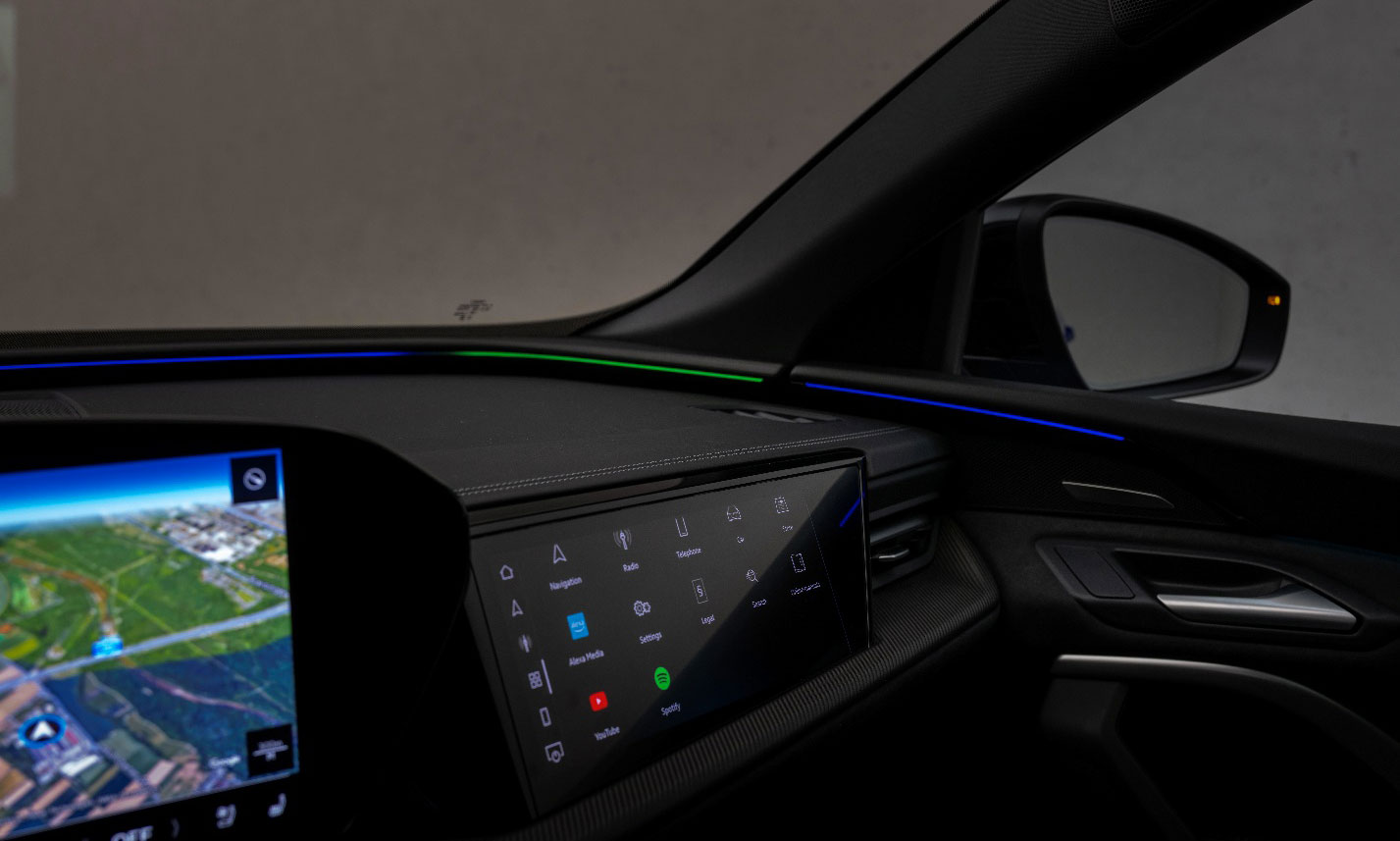
I started working on ambient lighting with RGB LEDs (red-green-blue) at their early beginnings: just two LED suppliers offered them, automotive qualifications weren’t yet finalized, and there were only two power options available: 0.15 and 0.5 watt.
When first auto interior applications went live, it was a major achievement for automakers’ work toward personalization and optimal user experience. Going from a few 15¢ light bulbs to RGB LEDs, the interior lighting budget had to increase multiple orders of magnitude, approaching €1,000 on some vehicles now. I remember this real step we made when the Renault Espace was presented in 2014 with its multi-sense feature (video) more than a decade ago!
Our last interior lighting DVN Report was written in 2019, so it was time to update it and contact all the major LED suppliers and LED IC layers, to see how interior lighting tech has changed. Our new report is here.
From static on/off lighting, to more theatrical arrangements with programmed scenarios, to interactive light with new scenarios and capabilities provided via OTA updates, the game has totally changed, and new technology has appeared, pushed by Chinese consumer preferences which put priority on user experience and fun features as must-haves even for low segment vehicles.
For all these reasons, we are pleased to release our technical report about RGB LEDs today. I am publishing also a summary of my visit of Elausa in Barcelona, where I visited their assembly line for RGB LED modules (and more). More than 2 million RGB module units are produced there per year!
This is also the last DVNewsletter before the summer break. We will be back on 19 August. I wish you all the best for the summertime and looking forward to meeting you soon, at DVN Detroit (9-10 September), DVN Shanghai (29-30 October), DVN Ostrava (1-2 December) and DVN Munich (4-6 February 2026).