
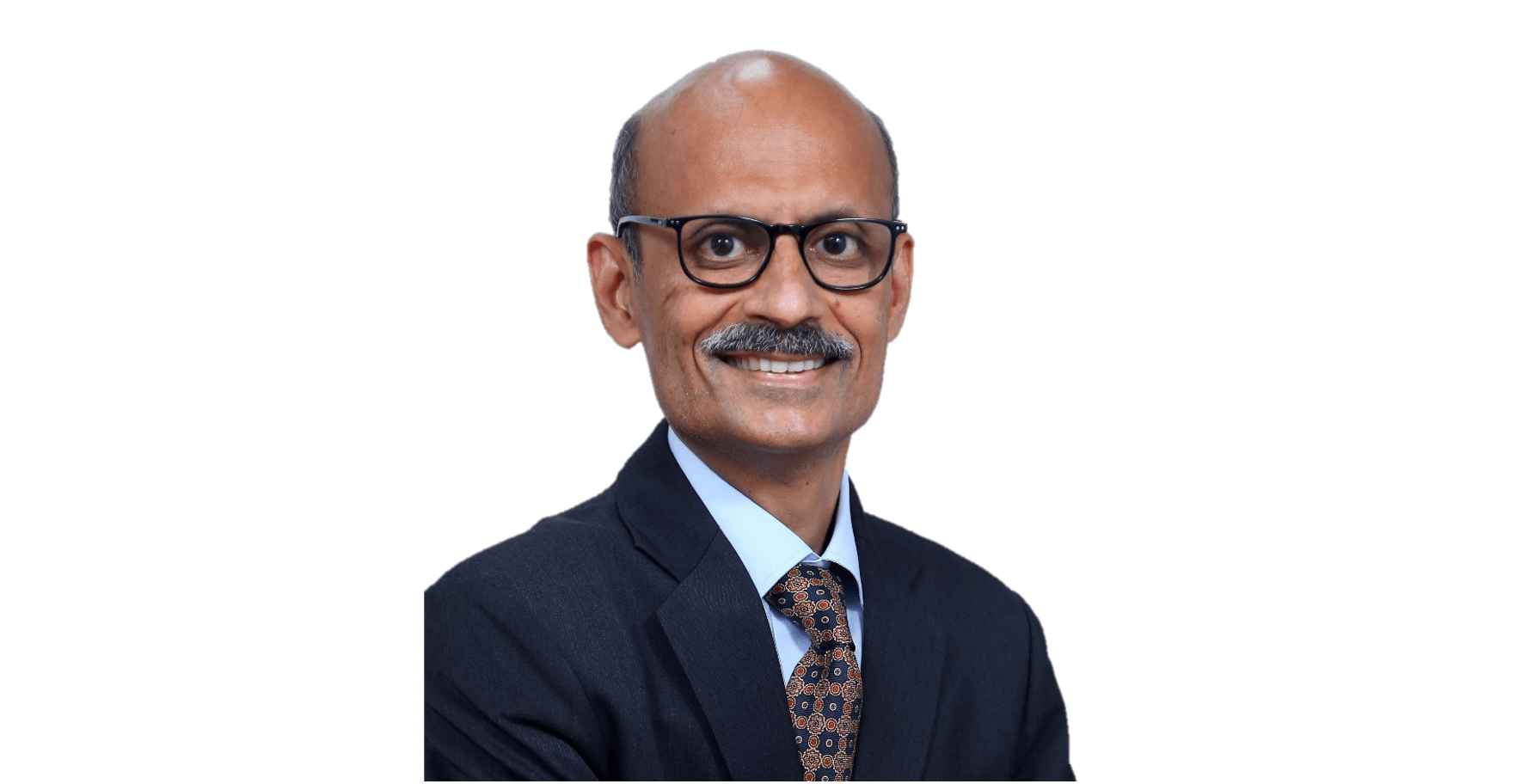
During ISOL 2025 last November, I met with Tarun Aggarwal and we talked about the automotive market in India, especially the lighting market.
We will be honoured to have Aggarwal on stage at our DVN Indian conference this year, on 28 and 29 October near Delhi, for the introductory speech, so we wanted to talk with him, before the event, about the Indian automotive industry. Maruti lead the automotive market there, with a share over 40 per cent, and there’ll be a big Maruti delegation at the DVN event.
As head of engineering, he is on a mission to bring ‘Joy of Mobility’ to all. Especially, personal mobility for the next billion people In India. Aggarwal is a visionary leader with over 36 years of automotive engineering experience. He is one of the key figures in developing Maruti Suzuki Engineering into an R&D hub of Suzuki Motor Corporation, outside of Japan. From establishing the styling design practise, he has held leadership position across domains like product planning, strategy, powertrain, electricals, body, interiors, and many more.
Paul-Henri Matha: During ISOL 2025, Fiem’s CEO Vineet Sahni mentioned value for advanced vehicle lighting in India is increasing exponentially, from ₹50,000 to ₹75,000 for passenger cars (~€500 to €750), and ₹7,000 to ₹10,000 for 2-wheelers (~€70 to €100). Uno Minda 4-wheeler CTO Todd Morgan mentioned global automotive market growth from 2019 to 2024 of 41.2 per cent in India (versus 4.1 per cent in China and 7.3 in South Korea, and declines of 6.4 per cent in USA, 13.9 per cent in Japan, and 22.8 per cent in France) with continuous growth in India by 2035 (forecast at 7.7 per cent). These Indian-market figures are impressive, no?
Tarun Aggarwal: Indian automobile market growth figures are impressive, and this growth will not only sustain, but will also improve further. In India there are only about 34 Cars for every 1000 people, which is very low for the fourth-largest economy in the world.
With the growth of the automobile market, the automotive lighting market is bound to grow. With new lighting features like connected lamps, animated lamps, enhanced interior lighting, lighted logos, and EV Charging indicators, the Automotive Lighting market will grow at a faster pace. Today automotive Lighting is not just for signalling and illuminating the road, it gives brand identity to the car and the company.
PHM: Can you explain the success of Maruti in India?
TA: Since its first launch of Maruti 800 in 1983, Maruti Suzuki has always been on a success path in India. It grew leaps and bounds in terms of business growth, numbers of cars sold and Sales & service Network. Maruti Suzuki has maintained its position as number one car brand in India since its establishment. We keep on adopting advance technologies at affordable cost and provide a delightful experience to our customers. All this success could be possible due to our customer centric approach and Japanese way of systematic working.
PHM: What is the special relation you have with Japan in India, and more especially at Maruti? Why is Japan so strong in India?
TA: The Japanese philosophy of smaller, fewer, lighter led to make affordable and efficient cars which gels very well with the requirements of the Indian market. The ideology of customer first and quality consciousness further strengthen the Indian and Japanese relationship. Maruti also follow the same principles to make a product which gives value for money while being contemporary. In view of these values, we have very special relation with Japan and that is why Japanese Automobile makers are successful in Indian market.
PHM: What are the main key points for Indian customer when they buy and select a car?
TA: Conventionally, Indian customers used to look for a reliable, efficient, and affordable car. In modern times the young generation also looks for stylish and safer design, latest technologies, and new features. Products of Maruti Suzuki excellently meet all these requirements. We always have a close monitoring on the market requirements and keep on evolving as per the new trends and technologies.
PHM: Is design important? I would say not some years ago, but when I see Mahindra Be6 or Tata Sierra, I think it is.
TA: Design is always very important; however, its aspects keep on changing with time and generations. New generation of Indians consider a car as an extension of their personal life space, and look for designs that are personified and reflect their personality. As per recent trends, exterior and interior lighting is going to play a pivotal role in design aspects and brand Identity of a car.
PHM: What about robustness? Do you have special requirement versus Europe? I remember at Renault a special requirement for horns (that only uno Minda was able to fulfil)?
TA: Robustness requirement depends on the uses of a specific product. In India the use of horn is much more frequent as compared to that in Europe, therefore the horns made for Indian Cars have to be more durable. Similarly, the Indian road conditions in contrast to that of Europe need a robust suspension system. Thus, there may be special requirements for a specific market depending on its use cases.
PHM: What about efficiency? CO2 emissions, EV transition, power consumption reduction for components including lighting?
TA: Efficiency is very important for sustainability and overall environmental balance. Maruti Suzuki is one of the most fuel-efficient car makers. In area of lighting also we are substantially shifting from bulb technology to LED technology, which leads to reduction in power consumption. Bulb technology will be gradually phased out in future and power consumption will further reduce.
PHM: How do you see competition with China? Do you fight or do you collaborate, or both?
TA: The demographics and market needs of both the countries are different. China is global leader in EVs. In India the EV penetration is still around 8 per cent. As of now there seems no competition from China, however there is a lot to learn from China in terms of the pace of technological development and infrastructure setup for EVs.
PHM: What about safety? At Renault, we do not need to see cars with 5-star Euro NCAP ratings for India; customers would not pay for that. Has it changed? What is important when we talk about safety?
TA: Awareness of safety has increased in the Indian market. Safety has become very important, and one of the main factors for choosing a car model. Many Indian customers consider it seriously and are ready to pay for it.
PHM: If I focus on lamps, what are the trends you see in India?
TA: In India the trends in automotive lighting include sleek lamp designs, use of DRL, lighting signature and brand identification, connected rear lamps, and interior mood lights. Going forward, ADAS-related lighting features like auto high beam and ADB will also be prevalent.
PHM: Do you develop special things in India, or do you follow Suzuki specification and requirements?
TA: Maruti Suzuki India engineers and Suzuki Japan engineers work in close collaboration with each other to develop the new models. It is a kind of excellent co-creation culture wherein the focus is to address the customer needs of a specific market.
PHM: The Victoris is designed with full LED lamps. What is the reason? Durability, design, power consumption? Are Indian customers ready to pay additional money for LED lamps?

TA: LED technology is gradually replacing the bulbs. We have already started adopting LED technology in our models for quite some time. The Victoris is our recently-launched model wherein most of the exterior light functions use LEDs. Usage of LEDs not only reduces power consumption, but also provides design and shape flexibilities to meet the latest styling trends for which Indian customer is willing to pay.
PHM: I saw the e-Vitara is equipped with ADB – first time in India. Why did you choose to offer ADB on the e-Vitara? I understood the usual habit in India is to drive in full high beam.

TA: The e-Vitara is one of our premium models wherein ADB is introduced for the first time. Though ADB technology comes at higher cost, going forward its usage may increase when more and more vehicles will have ADAS (front camera) feature in India.
PHM: Is glare a big topic in India? During ISOL, authorities talked about glare. What do you think about that and what could you propose? a simple way to solve is to have automatic high beam deactivation mandatory. It will cost money (mandatory camera) but then car will turn off automatically the high beam.
TA: I think glare is a major issue not only in India but also at global level. You may be aware that the topic of glare is under discussion in recent sessions of GRE at United Nations Geneva, and a task force is also formed for it. It is a complex issue which involves various aspects like driving discipline, technological advancement, and good road illumination infrastructure. We have proposed the idea of audible warning in the car to avoid driving on high beam at low speed. I hope automotive industry, regulatory bodies, and government authorities jointly would address this issue.
PHM: What will come next in India? Do you follow European or Chinese trends with ADAS L2+ vehicles, SDV, high computing level vehicles, etc? Or are you a bit more pragmatic for the real customer usage?
TA: As far as ADAS use cases are concerned, I think these may be different for different countries. Indian traffic conditions are not the same as those of Europe and China, therefore in India, ADAS technologies are required to be customized as per the traffic scenarios and real customer usage of India.
PHM: Who are your main lamp suppliers? Are you happy with the Indian lamp makers? What do you request from them?
TA: We work with all leading lamp suppliers who design a quality product and who are at par with global standards of technologies and processes.
PHM: What about your supply chain? Most semiconductors, LEDs, PCBs, and tooling come from other countries. Do you have some plan to localize in India?
TA: PCB localization is already started and some of the lighting tooling is also local, however you are right that most semiconductors and LEDs are imported. There is a big focus from the Indian Government for semiconductor localization, and I hope that it will give results in coming years.
PHM: We will hold our DVN India event this coming October in Delhi. A lot of Maruti lighting engineers will be there. What will be their key messages to the world’s lighting community?
TA: I would like to appreciate the automotive lighting community for their excellent role in making vehicles safe and stylish with their innovative lighting solutions. Role of electronics and software will further increase in lighting, and more advanced features in cars will need seamless interaction of lamps with electronic systems. Keep working on latest technologies so that together we can provide vehicle users a delightful experience with best quality, affordable and trendy lighting solutions.


