Lidar Simplifies Autonomous Vehicle Integration

AEye has validated their Apollo lidar sensor on Nvidia Drive AGX Thor, confirming compatibility with the automotive computing platform for next-generation AVs and physical AI systems. Apollo can now operate with Nvidia DriveOS and join the Nvidia Drive Hyperion development ecosystem.
As manufacturers increasingly adopt common computing platforms for ADAS and autonomous driving, compatibility between sensors and onboard hardware is essential. Pre-validated integration can reduce development effort and hardware and software challenges, while accelerating system validation for OEMs and Tier 1 suppliers.
Validated for sensor-to-computing interoperability with Nvidia Drive AGX Thor, Apollo connects directly to the platform through Nvidia DriveOS. OEMs using Nvidia Drive can therefore integrate it as a pre-qualified component, reducing system-design risk. The validation also builds on AEye’s work with Nvidia across several automotive computing platforms and its participation in the Nvidia Halos AI Systems Inspection Lab, which evaluates partner products for functional safety, cybersecurity, AI safety and regulatory compliance.
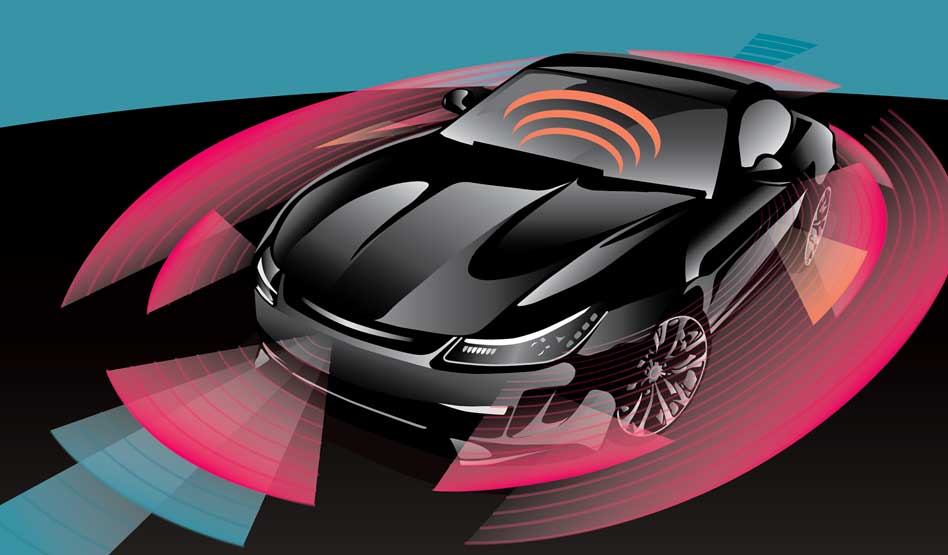
Designed for long-range perception, Apollo can detect objects up to a kilometer away. This software-defined lidar targets autonomous driving, ADAS, smart infrastructure, logistics and defence applications that require accurate environmental sensing for real-time decisions.
Matt Fisch, AEye’s chief executive officer and chairman, said: “As OEMs converge on platforms such as Nvidia Drive AGX Thor, validation places AEye at the centre of discussions about the next generation of autonomous vehicles. It reflects the credibility we have built with Nvidia and strengthens transportation customers’ confidence in AEye as a long-term sensing partner”.
Emerson’s New PXI Instruments Ease AI-Accelerated Automated Testing
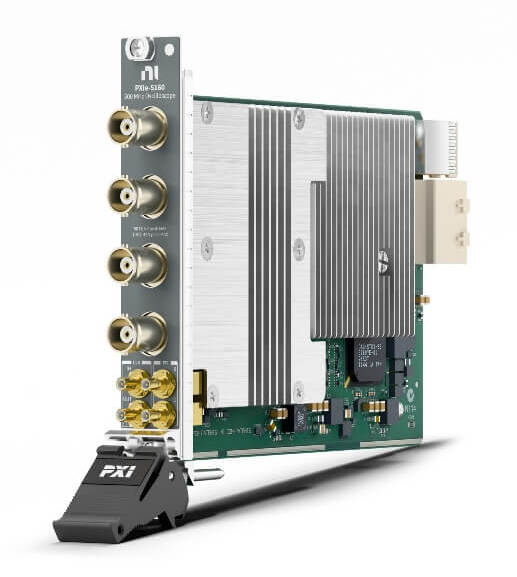
Automation specialist company Emerson has announced new NI PXI instruments that extend the measurement capabilities of the company’s automated test hardware and software, making their AI-accelerated approach to automated testing accessible to more engineering teams.
The new NI PXIe-4086 digital multimeter and new variants of the NI PXIe-5160 and NI PXIe-5162 oscilloscopes are part of the NI PXI platform. They provide precise timing and synchronization as well as high measurement accuracy for multichannel and multi-measurement applications in industries such as semiconductors, transportation, aerospace and defence, and research. Combined with NI software and NI Nigel AI, this platform helps engineers develop and automate complex, multi-instrument test systems faster that meet today’s needs and adapt to tomorrow’s needs.
Emerson’s NI VP of Marketing David Hall says the new tools “make NI’s approach to AI-accelerated automated testing accessible to more engineering teams. By combining the industry’s most powerful automated test platform with software that accelerates test automation, we help engineers accelerate product development, solve problems faster, and spend more time engineering rather than designing their test systems”.
The PXIe-4086 digital multimeter is presented as an affordable entry point for high-accuracy, high-throughput measurements, with 61/2 digit resolution and 35 ppm accuracy. The PXIe-5160 and PXIe-5162 oscilloscopes offer up to 1.5 GHz of bandwidth in 2- or 4-channel configurations, with 1 GB onboard memory options for high-bandwidth signal capture and analysis. On the software side, NI InstrumentStudio brings new support for the latest PXI instruments and switches extends no-code configuration, system provisioning, and debugging of multi-instrument systems. And NI Nigel AI bolsters continuous advancements in test-optimized AI, helping engineers accelerate the development and debugging of automated tests.
The new offerings build on Emerson’s earlier expansion of the NI PXI portfolio, expanding the range of affordable hardware and its connection to NI software available to automated test teams. Together, these additions expand access to automated testing by bringing together cost-effective instrumentation, integrated software workflows, and AI-assisted productivity on a common platform.