
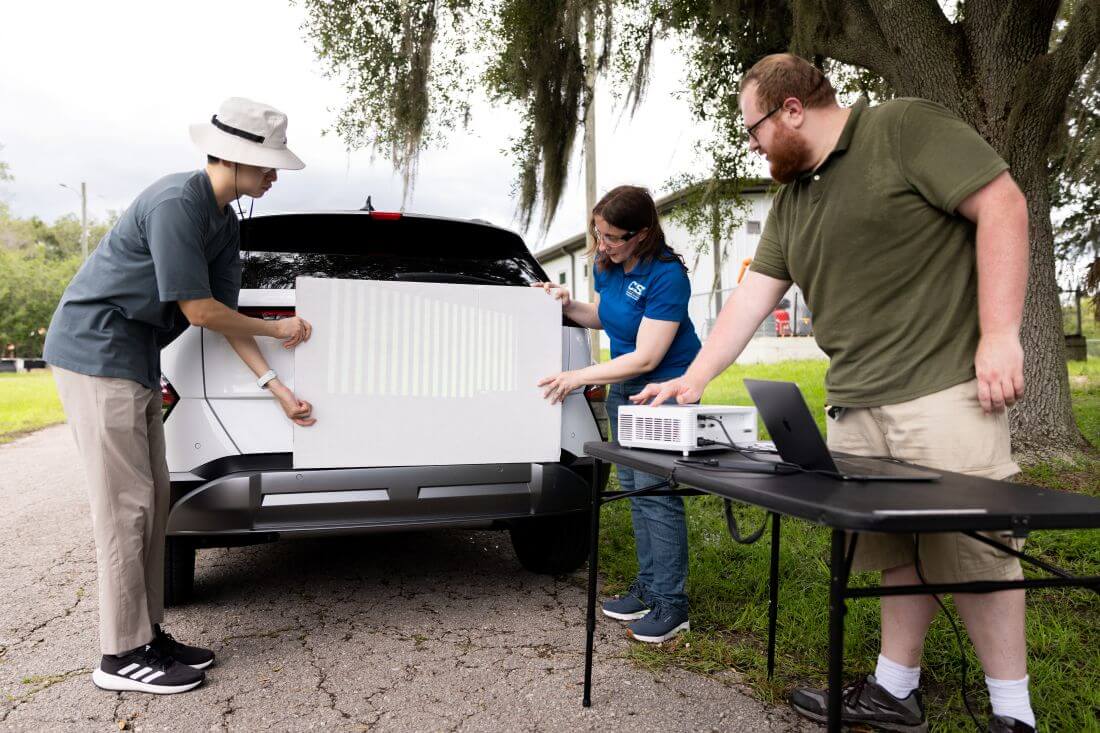
University of Florida researchers found that simple repeating patterns can distort depth estimates from stereo cameras. In tests with several sensors, conventional algorithms and AI models, a small striped or checkerboard pattern made part of an object appear closer or farther away. On a vehicle, the error was sufficient to trigger a response such as braking.
The same perception method is used in road vehicles, drones and ground robots. That gives the work a concrete dual-use boundary. A naturally occurring pattern can create a safety problem, while a deliberately placed pattern could become an attack. The researchers developed software and model changes aimed at the underlying depth-calculation weakness rather than adding more training examples alone.
The study was scheduled for presentation at ACM CCS in November 2026 and was available as a preprint. Its results should therefore be treated as research evidence, not proof that every stereo-vision system has the same field vulnerability.