

By Kasper Hammer
(During the summer break, we gave the pen to Kasper Hammer, an independent architectural lighting designer, to talk about vehicle lighting and give his insight to our readers. Hammer is the founder and creative lead at SKH, a feted design studio rooted in lighting design, audio, and creative direction. -DVN)
Coming from an architectural lighting and audio perspective, the automotive industry’s ability to push and integrate technology and innovation has always been inspiring. The industry develops and implements solutions at a speed that the built environment can only dream of, with buildings expected to last between fifty and one hundred years.
At the same time, working in architecture we have developed a deep understanding of how light, sound, materials and spatial composition affect people over extended periods of time. Electrification, digital experiences and increasingly autonomous technologies are transforming the vehicle into a place we inhabit, not simply travel. And this transformation requires a shift in the design approach.

Designing for Living
One of the advantages of working with sensory input is that human evolution moves slowly, very slowly. While we are highly adaptable to our surroundings, the fundamental ways in which our sensory systems respond to light, sound and spatial conditions have changed very little.
We therefore have a vast amount of knowledge about how external stimuli influence our perception, behaviour and wellbeing. Much of this is rooted in our long exposure to natural rhythms: variations in daylight, sound, movement, contrast and environmental change. And this gives designers a powerful platform for to work from.

Because every sensory design decision then has a purpose and effect: the choice of tone, spectrum, intensity and direction of light combined with use of contrast and shadow in a dynamic setting will make a profound impact. These are not only aesthetic parameters. They influence how a space is perceived, how comfortable it feels and how we function within it.
Light as Fabric
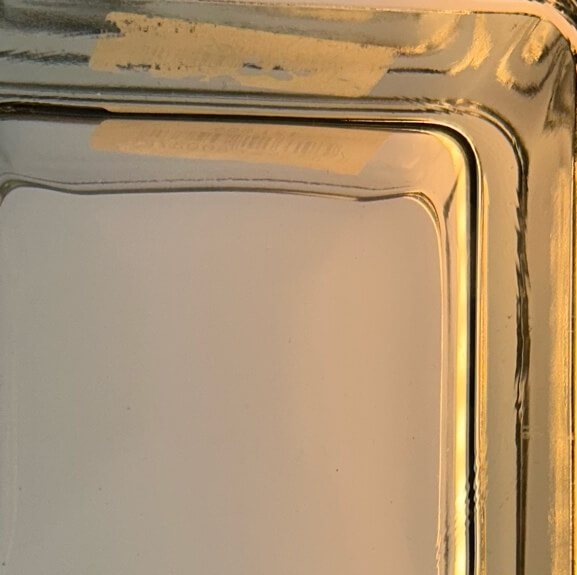
At our studio, we work with light and audio in the context of the real world. Our approach is to understand the science and technology and then translate that knowledge into sensory experiences that people want to live and work in.
Light is far more than illumination. Advances in chronobiology and non-visual lighting research have changed our understanding of light, not merely as something that enables vision, but as biological information.
Consider light passing through the leaves of a forest canopy. It creates direction, contrast, patterns of light and shadow, and continuous change. Compare this with a uniformly illuminated space with little contrast or variation. While an artificial light solution like that fulfils a technical requirement, it provides very little sensory information for the eye and brain to interpret.
And this type of uniformity contributes to sensory misalignment, cognitive fatigue and a feeling of discomfort. Across our architectural and mobility work, we therefore work with contrast and care as much about the darkness as we do about the light. It can be perceived as a rhythm defined by the spaces between its beats.

And it is not that we attempt to replicate nature literally, instead, we work with the principles found in natural light.
With the transition of vehicle interiors evolving from a driver-focused cockpit into living space on wheels, it is increasingly relevant to extend the traditional CMF palette with an L for light and, ultimately, with other sensory layers such as sound.
Because light is experienced through materials. Light and material are therefore not separate design disciplines they form a composition. Texture, reflectance, colour, gloss and translucency all parameters change our perception.

This principle is fundamental in our work with sensory design.
Sound as Atmosphere
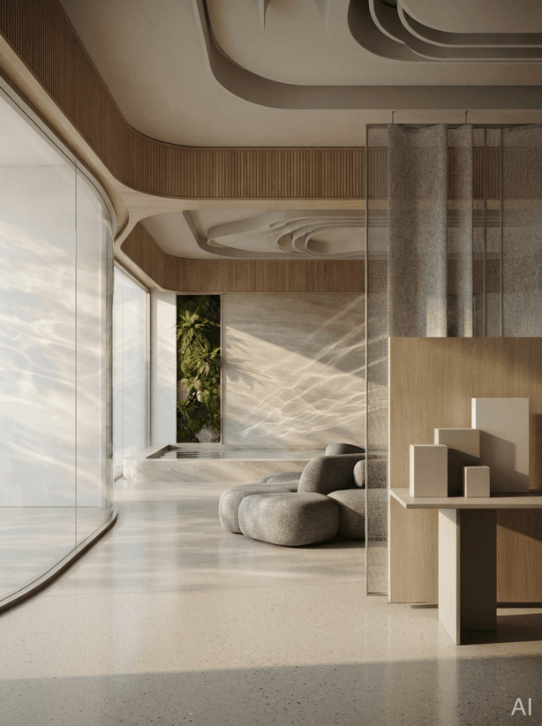
Our senses do not operate independently. Light and sound influence one another, and when they are designed together, each can strengthen the effect of the other.
We use audio for influencing mood, orientation, perceived quality and alertness. Frequency composition, tonality, temporal dynamics and biophilic references can be structured to create different emotional and functional responses.
When we derive selected frequencies inspired by natural environments we can subtly guide the user towards a particular feeling without presenting the full recognizable sound of nature. It is nudging us into a feeling.
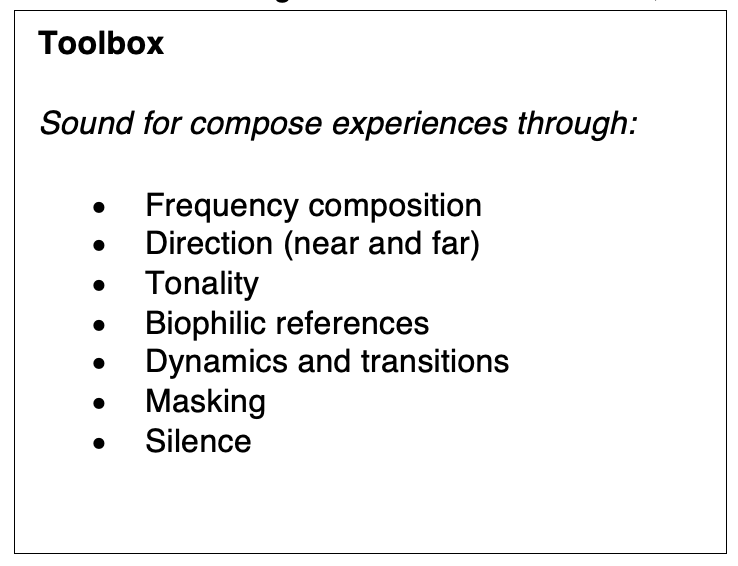
In architecture, acoustics is founded in the geometry and materials of the space itself. And it is the same principle for mobility. Sound is not only entertainment, notification or branding. It contributes to comfort, alertness and the perceived atmosphere of the interior.
The relationship between auditory and visual input is deeply embedded in our sensory system. For example, when wind increases, we may expect the light to change as clouds gather. The sound of moving water can be associated with reflected highlights and visual brilliance. One sensory input creates expectations for another.
Just as with light, we do not need to reproduce these natural scenarios literally. Instead, we can isolate selected properties and use them to create associations, emotional responses and changes in attention.
Designing Across the Senses
Designing a sensory experience is a design process which requires an understanding of users, context, activities, brand identity and the overall design intent.
The difference is that sensory inputs become an active part of the design palette. CMF, lighting, audio, UX and technology is viewed holistic rather than isolated systems.
Working on our adaptive biological lighting system we have learned that technical and science does not in itself result in a better experience. We find success when science, technology, light and sound are designed together.
An example is the work during the development of our Integrative Light Unit, ILU, the lighting technology and spectral composition were carefully engineered. But while it was technically correct the solution still felt too close to a lab device.
We needed to close the gap between performance and aesthetics that would be acceptable to the user.
By introducing a Kvadrat™ textile with a thick thread structure, the material reflected, absorbed and shape the light. It created subtle shadows, softened the visual expression and made the light feel much more inviting and appropriate for a living environment. The technical performance remained, but the interaction with the user changed significantly.

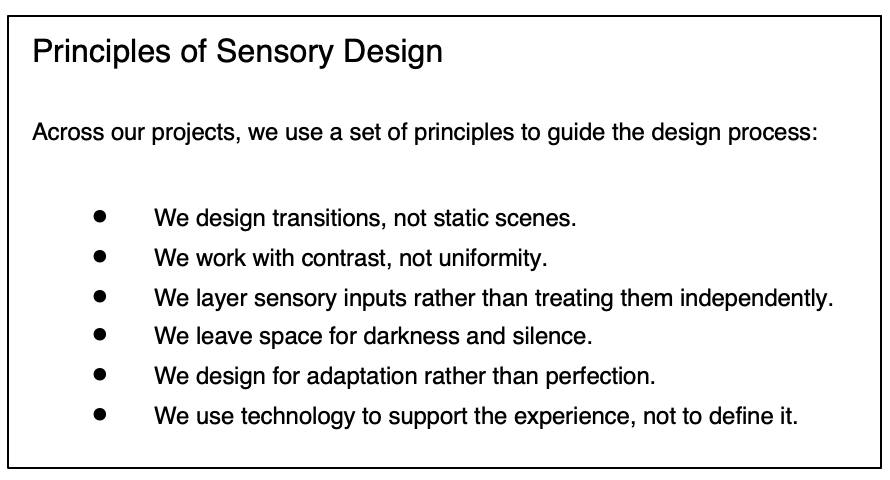
We work through aesthetic choices. Aesthetics are not something added after the technology has been developed. Aesthetic plays a key part in how our designs and solutions communicates, how it is accepted and how effectively it becomes integrated into everyday life.
The scientific and neurological effects may be subtle, but the experience should still feel intuitive, comfortable and emotionally relevant.
Adaptive Mobility
Science helps us understand what humans need. Design determines how people experience it. Technology provides the tools to make it possible.

The toolbox for creating liveable vehicle interiors has expanded significantly. Dynamic lighting systems, multi-channel spectral engines, spatial audio, occupant monitoring, environmental sensors and software-defined control make it possible to adapt the sensory environment in real time.
Inputs from the vehicle, its occupants and connected personal devices can allow the cabin to respond to changing situations. It may consider the time of day, journey duration, passenger activity or individual preference.

The system can then adjust light and sound as part of one coordinated sensory composition.
This should not simply result in a collection of automated features. The aim is to create a coherent experience that responds over time while remaining aligned with the identity and design intent of the vehicle.
That is the potential of adaptive mobility.
The Missing Design Discipline
In design projects we have teams working with exterior design, interior design, CMF, lighting, audio, UX and software. Each performs an important role. Technology can be integrated at a system level while the experience remains fragmented. The design challenge is therefore to ensure that the different sensory inputs support one another and communicate through one coherent language.
However, ownership of the combined sensory experience often sits across several different teams.
One of the main lessons from our projects is that we must connect these disciplines. Light, sound, material, scent, haptics, climate and interaction all contribute to the same human experience. And we need to ensure we establish sensory design as a shared method and strategy across existing disciplines.
Designing for living
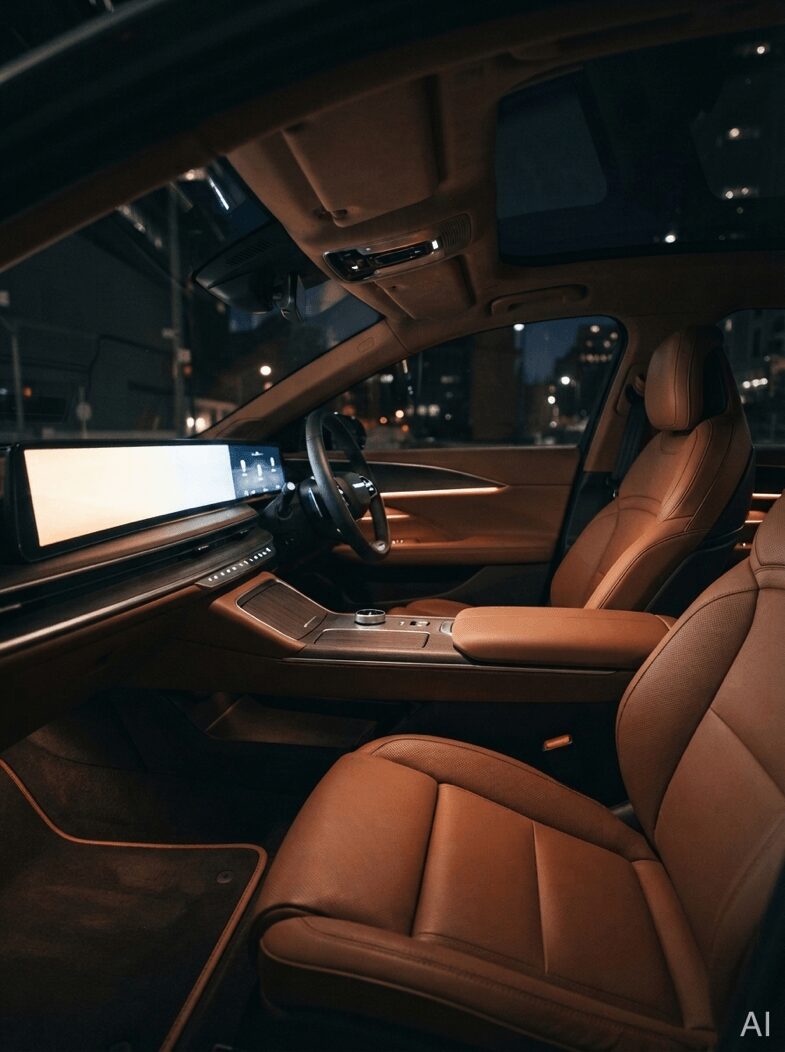
We already have many of the scientific insights and technologies required to integrate human experience more deeply into the vehicle. The challenge is to design them well.
Successful implementation begins with a sensory design strategy developed early in the process. This allows adaptive systems to be develop as part of one vision rather than being combined at the end.
The automotive industry has always been exceptional at engineering vehicles. The next challenge is to engineer experience and environments that help people feel, function and thrive.
Our bodies and minds remain shaped by natural rhythms. By translating the underlying principles of those rhythms into our living environments, we can create spaces that better support human wellbeing without attempting to recreate nature itself.
The next generation of mobility will not be defined solely by how vehicles move, but by how they make people feel and function while using them.
The challenge is no longer to understand light, sound or human biology as separate disciplines. It is to translate that knowledge into coherent sensory experiences that people genuinely enjoy spending time in.


