
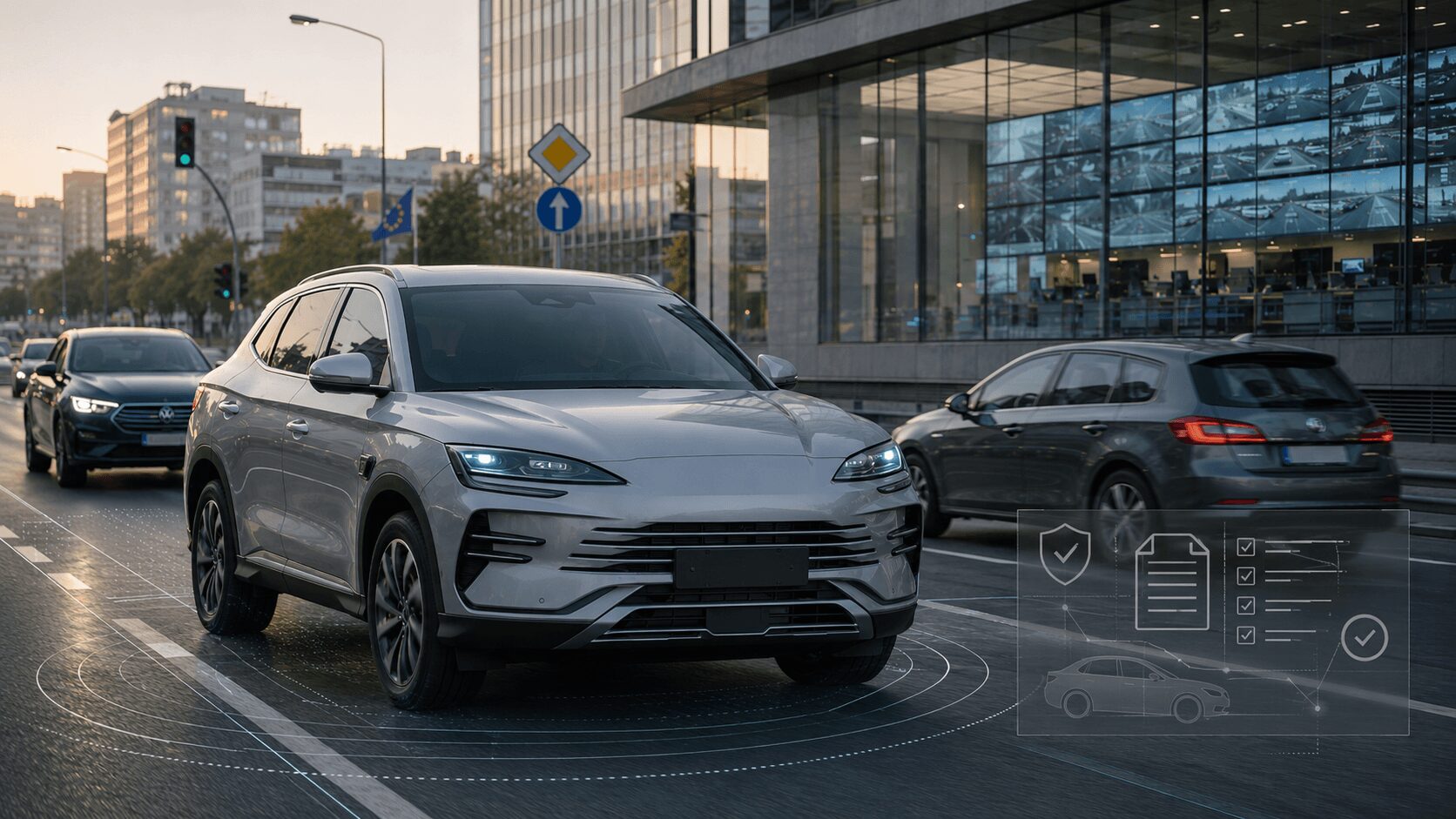
This source sets points to a practical shift. The main question is no longer whether assisted and automated driving can work in a controlled demo. It is who carries the cost, who gets the permit, what regulators accept, and how fleets respond when the road changes.
China’s GB 47955-2026 standard is the clearest signal. It turns vague L2+ language into defined product categories and gives regulators a stronger handle on marketing, HMI, data recording, and testing. It also fits a wider Chinese move toward calling these systems Assisted Driving rather than self-driving.
New Jersey shows the same pressure from another angle. A proposed robotaxi bill would require cameras plus two other sensing modalities, which would in practice favor lidar and radar. Prof. Missy Cummings, a former NHTSA senior safety adviser, warned that this could set a dangerous precedent. She is not defending vision only. Her point is that lawmakers should define unsafe behavior, permit withdrawal rules, and crash video disclosure instead of writing the sensor bill into law.
Autobrains adds the technology counterpoint. Its Munich work with Uber and Nvidia, and VinFast’s Robo-Car concept, present Agentic AI as an alternative to large end-to-end driving models. The claim still needs road proof. But the architecture debate matters because cost, compute, traceability, and sensor dependency now shape deployment timing
BYD and Huawei are starting to absorb financial risk around assisted driving in China. UNECE has approved a global ADS framework. Waymo, Tesla, Volkswagen, Mobileye, Uber, and Chinese OEMs are pushing toward larger deployments. Robotrucking now shows the same pattern in freight, ports, and mining. The next phase will be judged less by claimed capability and more by governance, data, naming, sensor evidence, and day to day service performance.

Dr. Markus Hahn
Senior Advisor, DVN


