
By Andrew Leuchtmann

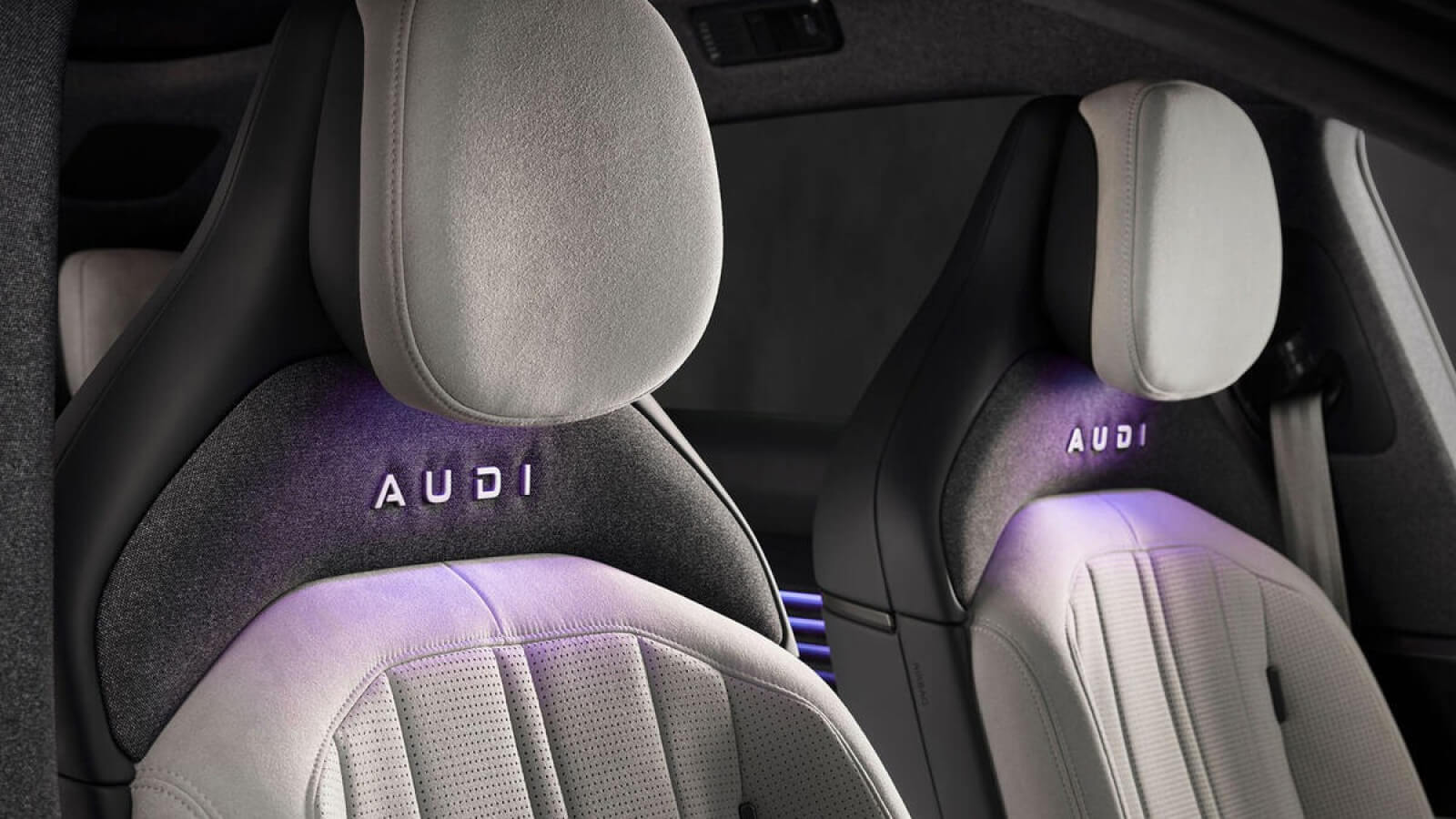
Audi is working to take greater account of the preferences of Chinese car customers and, together with SAIC, has announced four models based on SAIC’s ADP (Advanced Digitized Platform). These models are marked out by the distinctive AUDI lettering in capital letters and the absence of the four-rings Audi logo. After the sporty entry‑level model E5 was introduced last year, the first vehicles of the second model, the luxurious E7X SUV, have been delivered in recent days. That’s a fitting opportunity for DVN to speak with Zexia He, Technical Manager of SAIC Audi’s seat projects, about the highlights of the AUDI seats and the differences compared with the European‑influenced Audi seats.
DVN: How do Chinese customers’ preferences in car seats differ to those in Europe?

Zexia He: I would say there are several significant characteristics that apply specifically to Chinese customers. In China, customers place greater value on how the car can be used while stationary – in traffic jams, after work, or during weekends in nature – and less on pure performance while driving from A to B. This means, on the one hand, that the firm, supportive seat padding typical of the more driver‑oriented, European‑style Audi seats is not valued as highly by Chinese customers as driving performance. They do appreciate a sporty, design‑driven appearance, but above all, the seat must be pleasantly soft for city‑driving comfort, which represents the most frequent use case. On the other hand, the strong focus on the driver’s seat that is common in Europe – and the noticeably better comfort features that come with it – is not shared in China. Instead, customers expect all well‑known comfort features to be available as standard for both front seats, even at the base level, such as seat heating, lumbar support, 8‑way power seats, and similar functions.
The focus is actually even more on the front passenger seat, which is not without reason often referred to as the “queen seat”. This means that the lady of the house, for example, enjoys a Zero Gravity seat in the first row – a luxury understandably not available to the driver. And even in midrange vehicles, the comfort priority clearly lies on the second row – the rolling living room, which should support all aspects of leisure time: relaxing, sleeping, gaming, cinema and sound experiences, and even chilled beverages.
DVN: Looking at the entry-level E5, how were these preferences implemented?

Z.H.: The E5 Sportback, which by the way won the title China Car of the Year 2025, clearly embodies a sporty orientation with its low roofline and slim seats with integrated headrests. Nevertheless, as mentioned earlier, the seats have a distinctly soft character, combined with the very pleasant feel of the microfiber synthetic leather upholstery, which also features an antibacterial surface treatment for family health. Even the base version of the four available equipment packages includes, for both front seats, a 12‑way power adjustment including 4‑way lumbar support, memory, seat heating, and multilayer comfort padding. Seat ventilation, a highly effective 8‑point massage function, and a three‑stage rear seat heater are also available at extra cost.
DVN: Now, what seat features are offered in the higher‑priced E7X, and how do they differ to the Euro-centered Audi models?
Z.H.: Although the E7X seat is technically based on the E5 variant, it has been refined in every respect. The design, with its large, separate headrests and high‑quality genuine leather upholstery, appears considerably more sophisticated, and the equipment – including integrated Bose speakers and, in particular, the optional Zero Gravity seats for the ‘queen seat’ in the front and for the rear passengers – creates a true upper‑class feel‑good atmosphere, especially for quality time during leisure activities.


A note regarding the various seat structures used within the SAIC Group, which indeed differ from the European‑influenced Audi seat structures of the Volkswagen Group: Unlike the extensive standardization of seat structures in Europe, SAIC limits seat variants but follows a modular approach that allows for certain model‑specific adaptations. However, in terms of performance – whether crash safety, weight, or adjustment ranges – I do not see any significant differences in project requirements.

DVN: Thank you very much for this highly informative exchange and for your time. We look forward to welcoming you as a speaker at the DVN Interior Workshop on September 8 and 9 in Shanghai, where you will share further insights into the AUDI seat systems. To conclude, could you tell us who the JIT supplier of the AUDI seat systems is?
Z.H.: With pleasure – and thank you as well. The JIT supplier for both the E5 and E7X is Yanfeng, which is certainly no secret.


