
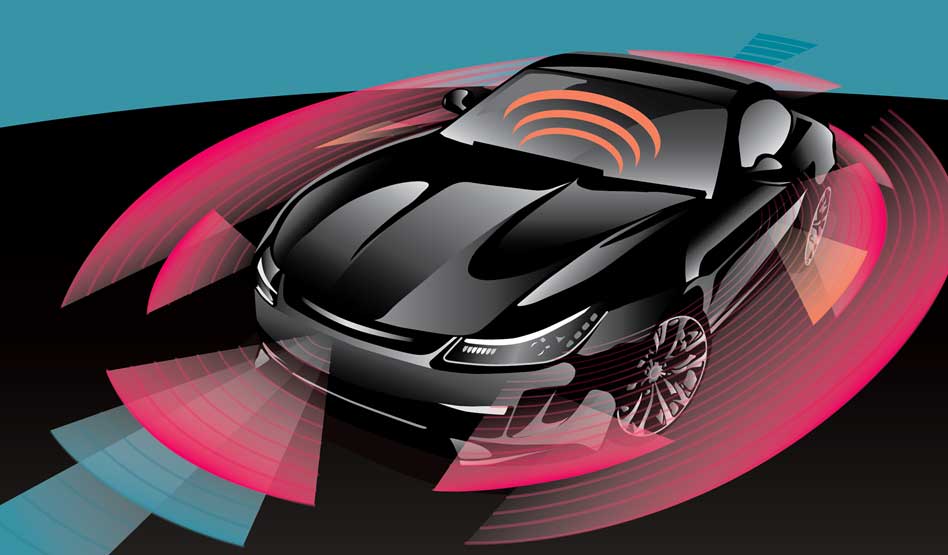
TÜV Rheinland Launches lidar Automotive Certification FastTrack+
TÜV Rheinland launched recently FastTrack+, an accelerated certification route for automotive solid-state lidar systems. The channel is limited to units that have already passed IEC 60068-2-64 broadband vibration testing and cuts the certification timeline from 16 to just 8 weeks. Priority is given to manufacturers with AS9100 or IATF 16949 quality certifications, with a particular focus on China-based lidar suppliers targeting international OEMs and tier-1s.
Lidar hardware exporters serving EU, US, and Japanese OEMs face growing pressure to shorten time to market. By reducing the certification cycle, FastTrack+ narrows the gap between product readiness and regulatory acceptance, which is especially important for 2026–2027 vehicle programs. Its main impact is faster qualification and better alignment with OEM validation milestones.
Lidar module manufacturers integrating sensors into ADAS or autonomous-driving platforms may need to revise their validation plans. Faster third-party certification allows ISO 26262 functional-safety work and environmental stress testing to be aligned more closely with external approval, reducing duplicated effort. The main impact is tighter project gating and better coordination between hardware, safety and compliance teams.
Service providers supporting pre-audits, test coordination or IEC 60068-2-64 preparation should see stronger demand for vibration-test readiness checks. Because FastTrack+ access depends on prior completion of this test, early validation support becomes essential rather than optional. The main impact is a broader service scope and earlier involvement in customers’ certification planning.
TÜV Rheinland says manufacturers should verify whether their existing AS9100 or IATF 16949 certification covers the exact site and product family intended for lidar submission. Scope alignment – not just certification status – determines FastTrack+ access. Documentation must explicitly include design, production, and testing activities for solid-state lidar.
IEC 60068-2-64 test reports should also be checked for completeness and recency: Reports must be issued by an ISO/IEC 17025-accredited lab, reference the full standard edition, and cover the final mechanical configuration submitted for certification. Reports older than 12 months – or those based on engineering prototypes rather than production-representative units – may require retesting before FastTrack+ application.
And candidate companies will need to align internal development milestones with TÜV Rheinland’s intake schedule The 8-week timeline assumes no major nonconformities during review. Teams should plan for at least one formal technical clarification round. Submitting complete documentation packages (including failure mode analysis, thermal test summaries, and EMC pre-scan data) at intake helps avoid delays in the first review cycle.
While the FastTrack+ channel was announced globally, localized implementation – including language requirements for documentation, regional lab capacity, and acceptance of remote audit elements – remains subject to country-specific operational guidance. Early applicants should request written confirmation of process applicability for target markets (e.g., Germany vs. US vs. Japan).
FastTrack+ shows that lidar certification bottlenecks are shifting from core technical validation to process efficiency. The shorter 8-week timeline does not reduce requirements; it assumes key vibration-reliability issues have already been solved, allowing TÜV Rheinland to focus on integration-level compliance, including functional-safety interfaces and optical stability under thermal cycling. Strategically, the program signals that certification bodies are adapting to more mature lidar supply chains, especially in China, where volume production is moving faster than regulatory harmonization. Its timing is significant, as it precedes several L3 ADAS launches planned for late 2026 and early 2027 and aligns with OEM validation windows.