
Speos: Optical System Design, Validation with Advanced Simulation

Ansys’ Speos product is an advanced optical design and simulation platform that enables accurate prediction and analysis of optical performance prior to physical prototyping. This software empowers engineers to simulate light propagation through various optical components and assess the illumination characteristics of sophisticated systems.
Leveraging state-of-the-art ray-tracing and light propagation engines, Ansys Speos models interactions between light and optical elements such as lenses, reflectors, light guides, and diffusers.
Through comprehensive simulations, users can evaluate critical parameters including illuminance, luminance, intensity distribution, and stray light behaviour, thereby streamlining optical optimization and reducing both development time and cost.
The platform offers an integrated design environment with robust CAD interfaces, supporting compatibility with leading platforms like Siemens NX and PTC Creo. This integration facilitates work with complex 3D geometries and mechanical assemblies throughout the optical design process, supporting parametric modelling workflows for joint evaluation of optical and mechanical elements.
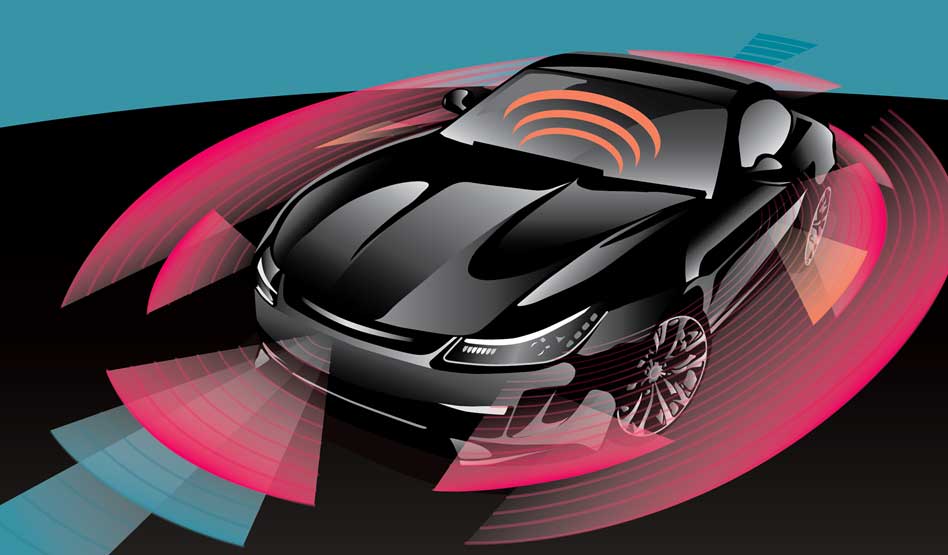
Speos encompasses powerful tools for optical design optimization, sensor modelling, and illumination analysis, which support the development of systems such as automotive lighting, display technologies, and imaging sensors. It can also simulate the behavior of cameras and lidar sensors in realistic environments, enabling assessment of optical sensor performance in applications such as autonomous vehicles and machine vision.
A distinguishing capability of Speos is its human-vision-based visualization engine, which replicates lighting conditions as perceived by the human eye. This feature allows designers to assess factors like visibility, glare, and visual comfort in contexts such as vehicle interiors, consumer electronics displays, and architectural illumination. Advanced visualization options, including virtual reality, provide immersive design review experiences.
Furthermore, Speos seamlessly integrates with the extensive Ansys Multiphysics simulation suite, allowing for combined optical, thermal, mechanical, and electromagnetic analyses. For instance, the platform can assess the impact of mechanical deformation due to thermal variations on optical performance, supporting holistic system-level modelling.
Widely adopted across industries including automotive lighting, consumer electronics, aerospace, and optical sensing, Ansys Speos empowers engineers to efficiently design, optimize, and validate optical systems virtually, thereby enhancing product performance and minimizing reliance on costly physical prototypes.
Hesai Joins Nvidia Lab to Validate Lidar Safety

Hesai Technology has joined the Nvidia Halos AI Systems Inspection Lab, the first ANSI National Accreditation Board (ANAB) accredited inspection lab for AI-driven physical systems. As a member, Hesai will evaluate and validate its lidar platforms within this unified framework for functional safety, cybersecurity and AI compliance.
Nvidia Halos is a full-stack safety system for physical AI that unifies safety elements across vehicle and robotics architectures and their underlying AI models. It combines hardware and software components, tools, models and design principles to safeguard AI-based, end-to-end AV and robotics stacks.
Hesai cofounder and CEO David Li says, “Autonomous systems will only achieve broad adoption if they meet the highest standards of safety and reliability. As autonomous vehicles and intelligent machines move toward large-scale deployment, safety becomes the defining requirement for the entire system. Our work with Nvidia began several years ago with the integration of Hesai lidar on Nvidia autonomous computing platforms. Lidar is often the primary sensor responsible for detecting hazards in the most critical situations on the road. Joining the Nvidia Halos ecosystem allows us to further strengthen the safety architecture required to bring trusted autonomous technology into everyday use.”
Hesai has cumulatively delivered more than two million lidar units globally, empowering advanced driver assistance systems, autonomous vehicles and robotics applications across a growing number of commercial platforms. They have developed lidar systems with the understanding that these sensors operate in safety-critical situations where reliability and accuracy directly impact human safety. Safety has therefore been embedded in the company’s engineering philosophy from the start.
Hesai said they introduced the world’s first lidar to obtain ISO 26262 ASIL B Functional Safety Product Certification, accredited by Germany’s SGS TÜV. Today the company holds the largest portfolio of ISO 26262 certified lidar products globally. Hesai also contributes to the development of global lidar safety standards through ISO TC22 SC32 AHG1, alongside industry leaders including Bosch, Denso, Sony, Nissan and ZF.
At the core of Hesai’s engineering approach is the company’s ‘Safety Triad’, which integrates functional safety, Safety of the Intended Functionality (SOTIF) and cybersecurity across all lidar system designs to ensure safe deployment in complex real-world environments.
Hesai’s work with Nvidia dates to 2019, when Hesai lidar technology was first integrated with Nvidia autonomous computing platforms to deliver high-precision ground truth data for use in advanced driver assistance and autonomous driving systems.
In addition, Hesai was recently selected by Nvidia as a lidar partner for Nvidia Drive AGX Hyperion 10, a reference compute and sensor architecture that makes vehicles Level 4-ready, enabling automakers and developers to build AI-defined fleets.


